Archaeologists have identified the oldest instrument in Europe, made from elephant bone. Human ancestors used this item to sharpen stone axes.
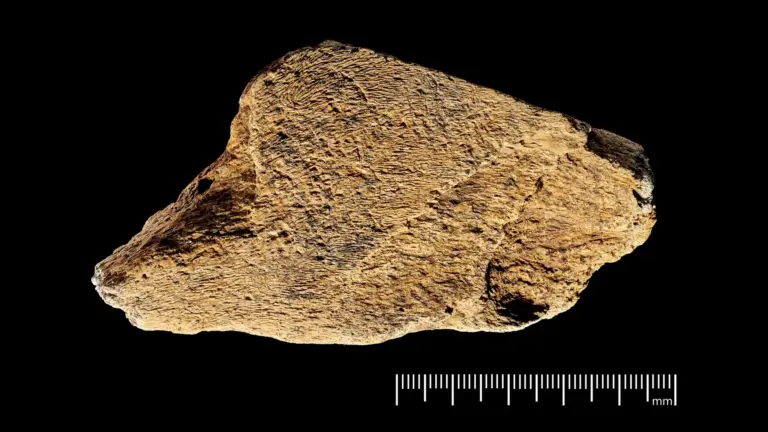
A unique artifact found at the famous Boxgrove site in southern England turned out to be specialized tool. The study showed that this is a fragment of ivory, which ancient craftsmen turned into a retoucher – a tool for shaping and sharpening the edges of stone axes.
The find, estimated to be 480,000 years old, is recognized as the oldest known ivory instrument in Europe. The triangular-shaped artifact, measuring approximately 10.9 by 5.8 cm, was originally discovered back in the 1990s, but its true purpose has only now been determined through detailed analysis.
Researchers from the Natural History Museum in London and the Institute of Archeology at University College London emphasize the rarity of such a find. It provides exceptional insight into the ingenuity and adaptive abilities of early human populations that explored northern latitudes half a million years ago.
Judging by the marks on the bone, the tool was used while the material was still fresh. This indicates that ancient people understood the properties of ivory and purposefully chose it to create a durable retoucher. At that time, elephant remains were extremely rare in the Boxgrove area, making such a tool particularly valuable.
Scientists believe that the creators of the tool could have been either early Neanderthals or Heidelberg man. The artifact demonstrates a high level of technological development and deep knowledge available materials, which made it possible to create high-quality stone tools.
The discovery of the oldest bone retoucher in Europe sheds light on the intellectual and practical skills of our distant ancestors. It confirms that already half a million years ago, human populations possessed complex knowledge and knew how to make the most of rare resources.
Source: Live Science
Image: Natural History Museum UK Photography Department