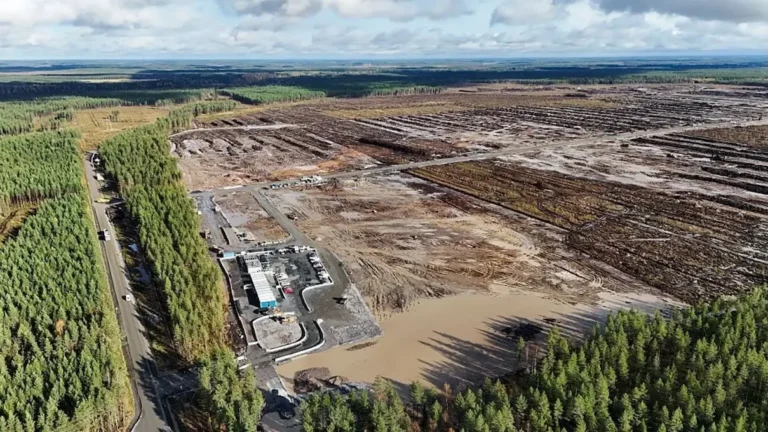
The construction of Google’s data centers in Finland has turned into an environmental scandal. According to conservationists, about 400,000 trees were felled across more than 500 hectares for two sites. Finland’s regulator has demanded that preparatory work be suspended because the company had not completed the mandatory environmental assessment. Local residents complain of muddy water in rivers and wolves coming up to homes.
The clearing affected two sites. In Muhos in the north of the country, about 330 hectares were cleared, where roughly 250,000 trees grew. Another 150,000 or so trees were cut down in Otanmäki, about 100 kilometers to the southeast. Besides the forest, the topsoil in Muhos was stripped, exposing extensive areas of ground.
Local residents reported that cloudy brown water is running from the Muhos site into a stream that feeds the Oulujoki River. In Otanmäki, people said that after the forest disappeared, wolves began coming into the village, and the noise of construction disrupted their normal lives.
On October 6, Finland’s licensing and supervisory authority demanded that Google’s subsidiary stop landscape-altering work until the environmental assessment is completed. Google’s head in Finland, Antti Järvinen, apologized, saying the company had acted on its “best understanding of the law” at the time.
A petition demanding stricter rules for data centers and compensation for affected communities has gathered more than 93,000 signatures. Google has promised to plant forest on 130 hectares in Muhos, but environmentalists believe this does not make up for the losses: young plantings cannot replace a mature ecosystem.
Both sites are part of Google’s €13 billion investment program, the largest in the company’s history in Europe. Finland attracts tech companies with its cold climate, available land, and stable environment. About 145 data centers are at various stages of planning in the country.
The story in Finland shows that AI investment can begin with environmental problems that then have to be dealt with for years. Water consumption, energy source, grid load, site selection, and impact on biodiversity should be assessed before construction, not after. Environmental assessment and transparent monitoring should be part of a project from the very start.
Source: BBC
Image: BBC