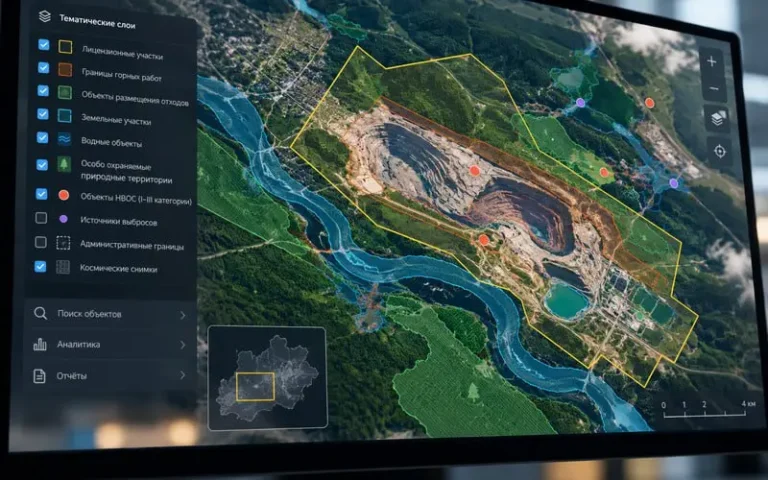
Rosprirodnadzor, Russia’s environmental watchdog, has expanded the capabilities of the Geoportal, a subsoil use monitoring system that relies on cartographic data, satellite imagery, and artificial intelligence. The system has been loaded with information on 240,000 active and annulled licenses, 257,000 facilities with negative environmental impact in categories I–III, and 3 million emission sources.
The Geoportal makes it possible to compare the boundaries of mining operations with licensed areas and project documentation, and to identify signs of violations of environmental requirements and late land reclamation.
In an initial analysis of about 50,000 licenses, signs of possible violations of Article 26 of the Law “On Subsoil” were found in more than 20% of annulled licenses. The agency stresses that these results require additional verification and are not confirmed violations.
It has also become known that Rosnedra has put two deposits in Zabaikalsky Krai up for auction. Bidding will take place on December 9. The deadline for applications is November 23, 2026.
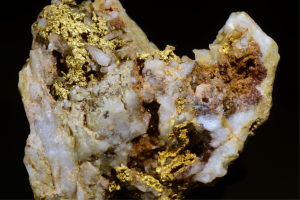
The Zergun deposit holds C2-category balance reserves of 8.8 tonnes of gold and 4.2 tonnes of silver. The starting payment is set at RUB 923.284 million, and the license term is 15 years. Sretensk Copper Company, linked to Nornickel, previously declined to develop the deposit.
The Belukhinskoye deposit has C1-category off-balance reserves of 2,597 tonnes of tungsten. The starting payment is RUB 282.436 million, more than five times the level of the failed 2025 auction.
Digital oversight and auctions are two sides of the same policy: the state is simultaneously tightening supervision of subsoil use and trying to bring new sites into circulation. How effective this approach proves will be shown in practice, from the verification of identified signs of violations to investor interest in the deposits offered.
Source: @zolteh
Image: Rosprirodnadzor