There is a stereotype that a portable X-ray fluorescence analyzer determines arbitrarily small concentrations of gold in anything, quickly, simply and cheaply. In advertising you can even hear that it is capable of finding gold with a content of 1 gram per ton. Why this opinion is wrong – we’ll figure it out together with the head of the Laboratory of X-ray Spectral Analysis Methods Oleg Nabelkin and leading consulting geologist Elena Ryazanova.
Article partner: SNK PVP, a supplier of portable X-ray fluorescence analyzers. These instruments are widely used in geology for rapid analysis of ores and rocks in the field.
We will customize a solution for your needs! Read More…
The analyzer shows a lot of gold
Sometimes, when analyzing a sample, a portable analyzer may display 200 grams of gold per tonne. But this is unlikely to be true and here’s why.
Gold is a noble metal; in nature it almost does not enter into chemical reactions, therefore it is distributed extremely unevenly among rock minerals: in some places there is a lot of it, and in others there is little. Gold is found in the matrix of the sample, that is, in the aggregate of minerals. The matrix can be light, for example, quartz, or heavy, for example, sulfide. Measurement with the help of a portable analyzer is always superficial: what gets into the window of the device is what it counts. There was a grain of gold about a millimeter in size – the analyzer showed 200 grams per ton.
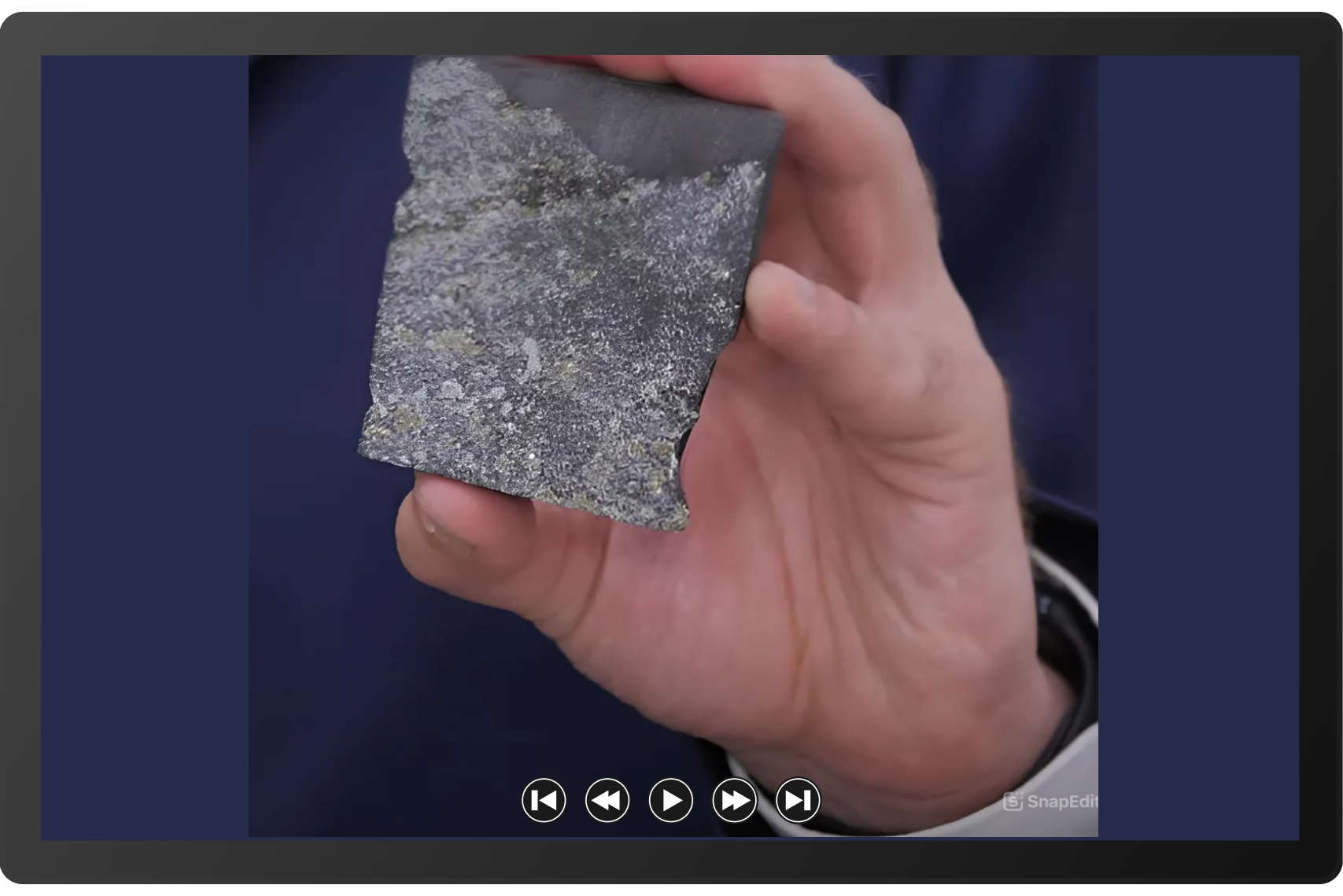
For profitable development of the deposit, the gold content must be from 0.5 g/t. Geochemists and prospectors are interested in other contents – from 0.03–0.05 g/t, since they may indicate industrial reserves of gold at depth. But rather, XRF will confidently find gold with a content of 30 g/t.
Modern portable analyzers have a sensitivity for gold from 2 to 20 g/t, depending on the matrix in which it is located.
Oleg Nabelkin
It happens that when analyzing an empty sample, for example, an aluminum plate, the device shows gold lines in the spectrum. This happens because the filling of the analyzer itself—the parts of the X-ray tube or detector—is gilded.
The analyzer does not show gold
Since the concentrations of gold in the ore are low, specialists look for this metal by its satellites – elements that correlate with it. For example, these are zinc, bismuth, arsenic, antimony. Their concentrations are higher and they are recorded better, but there is a drawback: satellite elements can interfere with the analytical lines of gold and produce noise.
The noise level depends on the type of matrix. A light quartz matrix consists mainly of silicon and oxygen, which have almost no effect on the signal-to-noise ratio. The heavy sulfide matrix consists mainly of iron, arsenic, copper, zinc, lead, bismuth – heavy elements that strongly absorb X-rays. It is more difficult for secondary X-ray radiation from gold atoms to escape from such a matrix, which significantly reduces the useful signal from gold.
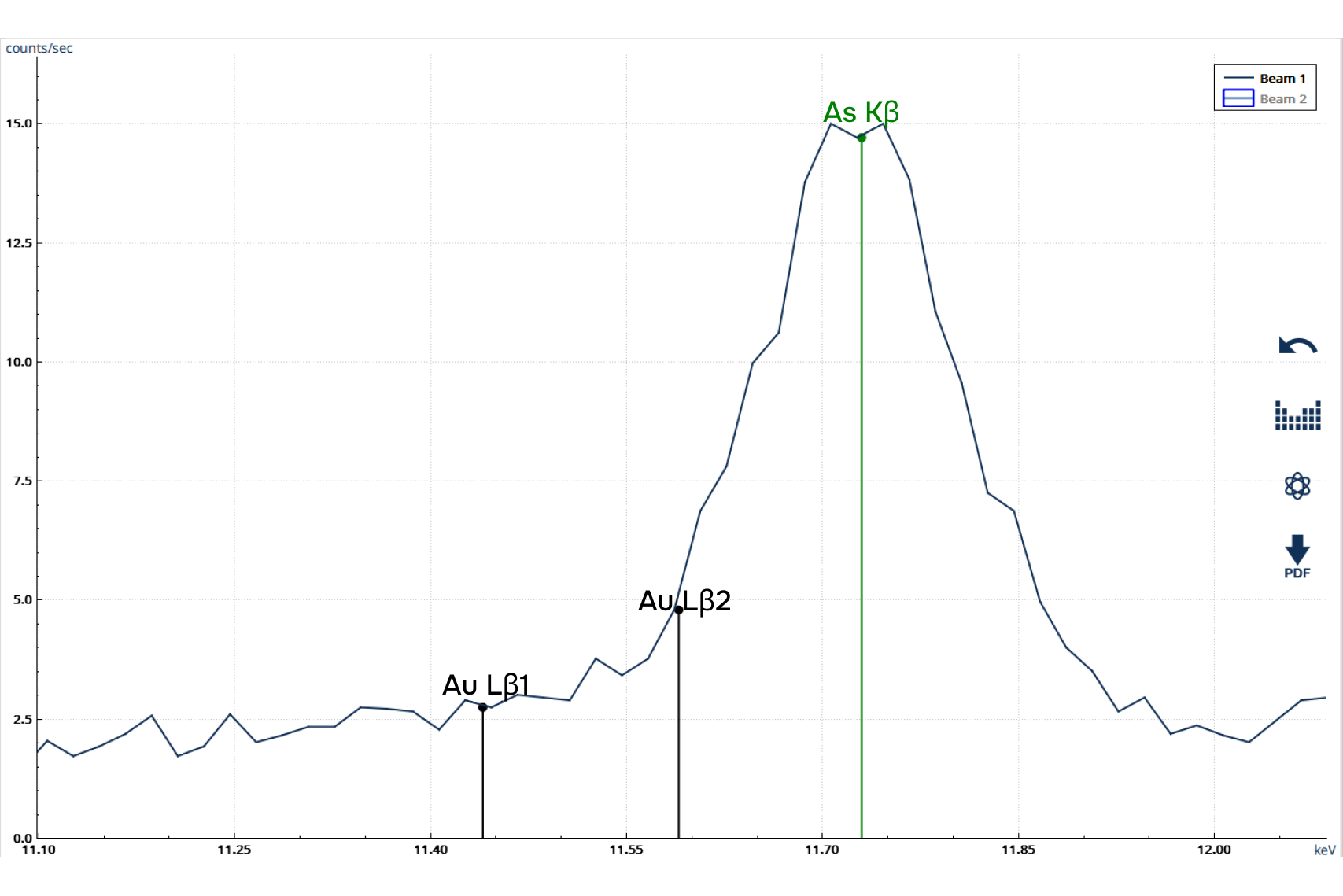
Using satellite elements, you can derive a correlation between the gold content, for example: a lot of arsenic – a lot of gold. But there are deposits where such a dependence is absent.
How to search for gold with a portable analyzer: simple tips
Decide how you plan to look for gold, what opportunities there are for sample preparation and what concentrations of gold you plan to look for – this affects the choice of equipment, accuracy and speed of analysis.
- To search by geochemical profile A small budget analyzer that measures without sample preparation is suitable, since, probably, there should be a lot of elements associated with gold in the rock by mass, and they should be easy to register.
- If you intend to measure in powderThis means that the user is willing to spend time on sample preparation, and the accuracy and detection limits will be better.
- If the user does solid phase extractant (Editor’s note – a substance that is added to a sample to increase the concentration of gold), which means that he is ready to sacrifice analysis speed and productivity, but wants to directly measure gold quite accurately and on a portable device.
It is best to analyze the best prepared sample – it needs to be well crushed, ground, quartted and mixed to obtain a homogeneous mass.
To better understand the operation of the analyzer, take a look at the material “Portable X-ray fluorescence analyzer: instructions for use».
We wrote this material with the support of Alexander Chebotarev. You too can help our portal and make a small donation.
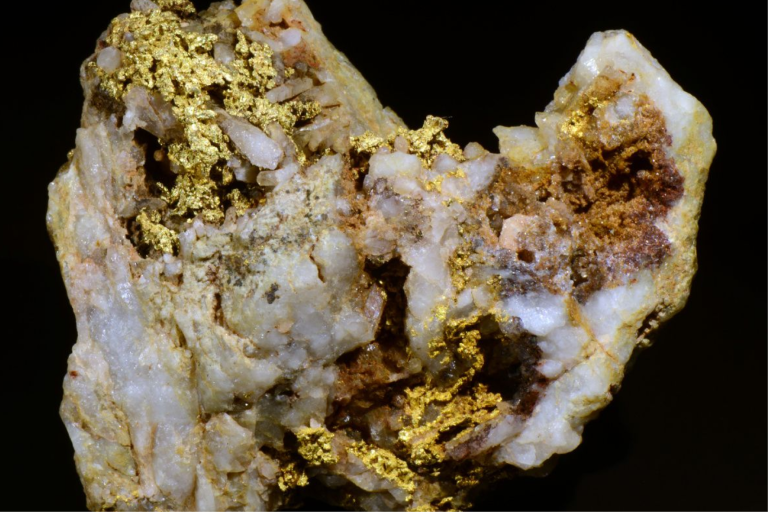
On the cover there is gold in quartz. Source: Catalog Minerals.ru