While the state prepares to nearly double the number of permafrost monitoring points, Yamal has recorded thousands of sites with unstable ground. Hundreds of kilometers of roads are under threat, and methane leaks have been found near bridges. Expanding the observation network should provide more data for forecasts and for preventing accidents.
By the end of December, the system will collect information from almost a hundred points. New sites will appear in Yakutia, Chukotka, Yamal-Nenets Autonomous Okrug, Zabaikalye, Khabarovsk Krai, Buryatia, and Tuva.
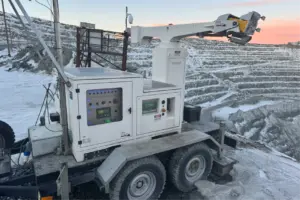
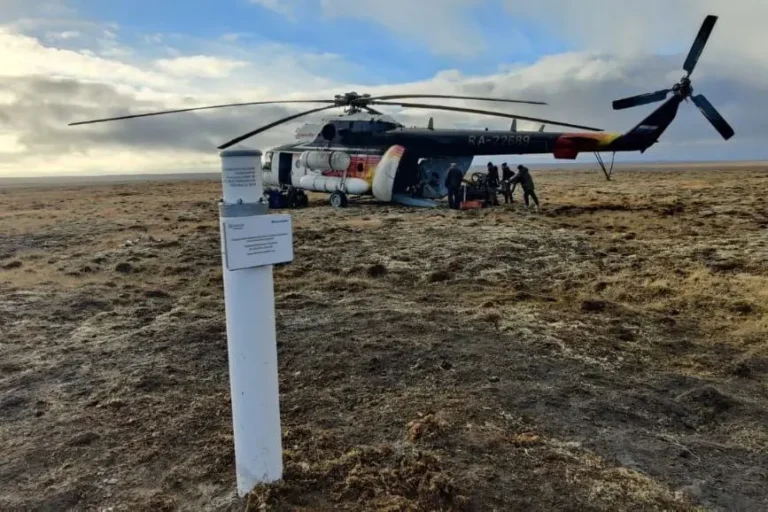
The basis of each point is a 25-meter borehole with 32 sensors that automatically record permafrost temperature at different horizons. The equipment is Russian, and data is sent online several times a day to the Arctic and Antarctic Research Institute (AARI). Yury Ugryumov, the institute’s deputy director, noted that expanding the network will help forecast more accurately and identify risks to buildings and infrastructure in time.
The need for such a network becomes obvious against the backdrop of the situation in Yamal-Nenets Autonomous Okrug. There, 6,168 sites have been recorded where permafrost is degrading: the ground is subsiding and sliding. Almost 300 kilometers of roads and railways are at risk. The most vulnerable is the Obskaya–Bovanenkovo–Karskaya railway line, where the hazard affects 73.5 kilometers of track. On individual sections, the number of landslides over the past 60 years has grown 23-fold.
Methane poses an additional threat. Near railway bridges, gas leaks were found in several boreholes at once. The region has also seen craters left by gas blowouts and mounds inside which methane may accumulate under pressure. Destruction of such sites threatens deformation of the roadbed and bridges, while the accumulation of gas creates an explosion risk.
The scale of the problem is underscored by economic estimates. Experts put the damage from permafrost thaw in Russia at more than three trillion rubles. For comparison, in northern Alaska, according to a study in Communications Earth & Environment, the cost of infrastructure damage by mid-century could reach $261 billion.
Expanding monitoring is an attempt to move from responding to accidents to preventing them. The denser the observation network and the earlier hazardous changes are detected, the greater the chance of reinforcing roads, bridges, and buildings before the permafrost can no longer bear the load.
Source: AARI
Image: AARI