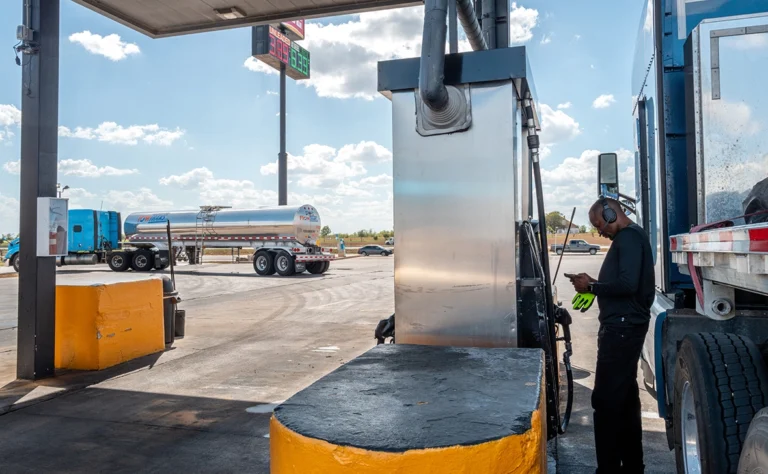
Demand for diesel fuel will continue to rise and by 2032 will bring the global market to $316 billion. According to Mordor Intelligence, the market will be worth $263.2 billion in 2026 and $272 billion in 2027, with a compound annual growth rate of 3.05% in 2027–2032. The main drivers are fleet expansion in developing Asia, backup power for data centers, and the recovery of maritime shipping.
The Asia-Pacific region remains the largest and fastest-growing market. Agriculture, mining, road construction, railway projects, and urban development depend on diesel-powered machinery and freight transport. India stands out in particular, where infrastructure activity and road haulage support consumption. In Pakistan, demand is steadily supplied by road transport.
The second driver is data centers. The growth of cloud computing and AI-related workloads is prompting operators to equip new sites with diesel generators to run during grid outages. Each new facility expands the fleet of equipment that may need fuel, although actual consumption depends on how often the generators are started.
The third factor is the revival of global shipping. The recovery of maritime trade is bringing more vessels back to bunkering hubs and busy corridors, which increases the number of refuelings and opens a sales channel for marine diesel and gasoil.
At the same time, several factors are holding the market back. Electrification of city buses, carbon taxes on fuel, and supply disruptions linked to the US-Iran conflict are pushing prices up and weighing on consumption. In Europe, this has already led to weaker demand for road fuel: supplies are disrupted, prices have risen, and purchasing power has declined.
The market structure is also changing in terms of quality. Government requirements for ultra-low sulfur content are steering demand toward cleaner grades. Pilot synthetic diesel projects are developing in Europe, and in mining the use of high-cetane blends is growing.
Diesel demand remains resilient, but its geography is shifting toward Asia, and quality requirements are tightening. For suppliers, this means that supply chain reliability and compliance with environmental standards are becoming as important as price.
Source: Mordor Intelligence
Image: Brandon Bell