Kazakhstan is starting a unique experiment to restore the Aral Sea ecosystem. In 2026, scientists will use innovative seed sowing technology using drones to replant the dry bottom of a former reservoir.
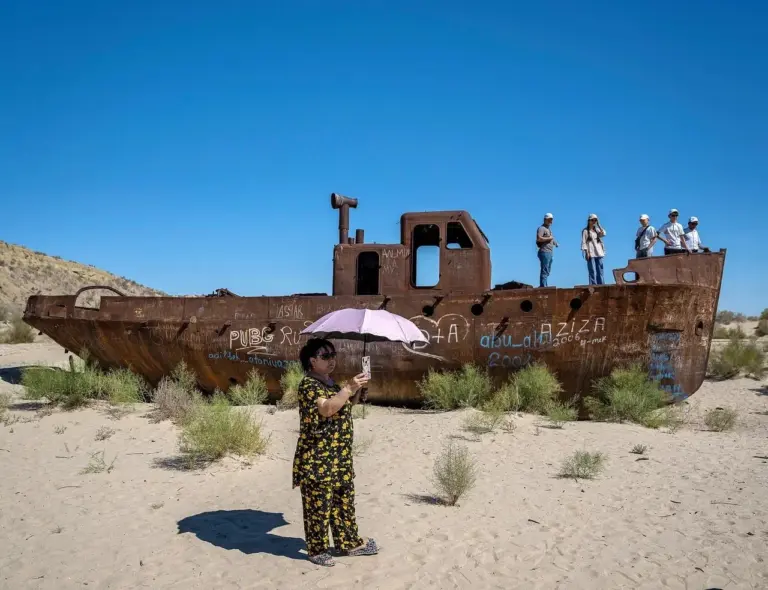
The dry bottom of the Aral Sea, which has lost 90% of its area, is preparing for large-scale landscaping. Scientists plan to use drones to sow special seeds, which could be a game-changer in the fight against environmental disaster.
The current state of the region raises serious concerns. The resulting salt marshes became a source of toxic dust that spreads throughout the world – from the Arctic to the Himalayas. This dust contains hazardous pesticide residues, threatening human health and the environment.
Aeroseeding technology was developed by specialists from the University of California. Its peculiarity is the use of self-burying seeds in a biodegradable shell. This approach ensures better penetration of seeds into the soil and significantly increases their germination in difficult conditions.
The first test phase is scheduled for spring 2026. Kazakhstani ecologists will conduct a test planting on a one-hectare plot. As Serikali Mukataev, director of the executive directorate of the International Fund for Saving the Aral Sea in Kazakhstan, explained, there are special requirements for the choice of plants.
“We select species with a shallow root system, since aggressive groundwater lies deep down,” Mukataev noted. “We need plants that can survive in a salty and chemically complex environment.”
If the experiment shows the success of the method and the survival rate of plants exceeds 20%, in 2027 the work will be expanded to 50 hectares. Until now, mainly saxaul seedlings have been used for landscaping salt marshes, but a new approach can significantly speed up the process of restoring the territory.
New technology for greening the Aral Sea opens up prospects for large-scale restoration of damaged ecosystems. Successful implementation of the project will not only improve the environmental situation in the region, but also create an effective model for combating desertification for other territories.
The material was prepared with the support of the Russian Ministry of Education and Science as part of the Decade of Science and Technology.
Source: @monocle_media