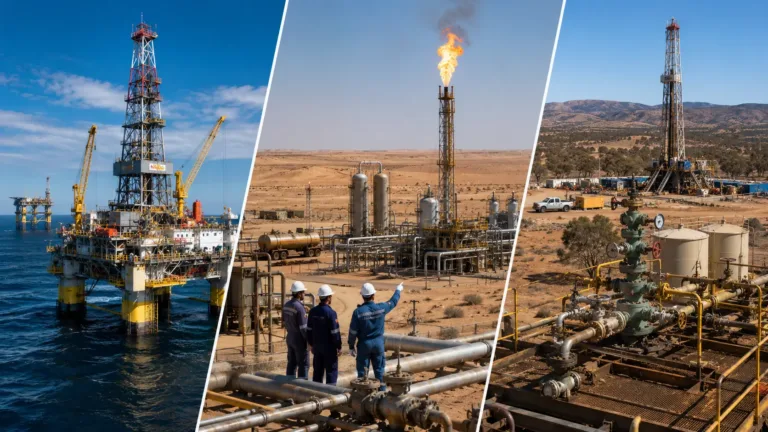
The final ten days of June brought three pieces of good news for the global oil and gas industry. Exploration companies in Norway, Egypt, and Australia reported confirmed hydrocarbon reserves at previously discovered structures. The newly verified volumes are expected to help meet the energy needs of entire regions.
Norway’s continental shelf has received a significant boost to its resource base. A consortium comprising Wellesley Petroleum, DNO, Equinor, and Aker BP has confirmed the commercial viability of the Carmen discovery. An appraisal well encountered gas and condensate volumes estimated at between 21 million and 107 million barrels of oil equivalent. The discovery is expected to be tied into the large-scale Ringvei Vest hub, which will integrate several recent offshore discoveries into a single production system.
Egypt is strengthening its position in the Western Desert. Minister of Petroleum and Mineral Resources Karim Badawi personally visited facilities operated by BAPETCO and reviewed drilling results from the Badr El Din area. The Badr 15 well is expected to add approximately 15 billion cubic feet of gas to the country’s reserves. The initial discovery at the structure was made in November last year, and the reserves have now been officially confirmed.
For Egypt, the new gas volumes are particularly important. The country is Africa’s largest consumer of natural gas, accounting for approximately 1.5% of global gas consumption. More than half of the fuel is used in power generation. Additional supplies could help address domestic energy shortages and reduce electricity disruptions.
Australia has reported the largest onshore tight gas discovery on its east coast in more than a decade. The government of Queensland has officially confirmed the resources of the Baffle Creek structure in the Denison Trough. Verified resources amount to 566 petajoules of gas. Two exploration wells have already entered commercial production and begun supplying the domestic market.
An additional benefit came in the form of high-quality light oil produced alongside the gas. The entire output has been purchased by Australian company iOR. The rapid start-up of production is particularly important for addressing energy shortages on the eastern seaboard. According to Australia’s Department of Energy, the country consumes approximately 48–49 billion cubic meters of natural gas annually, with 37% used by the power sector.
The exploration results announced in June have strengthened the resource base of three continents simultaneously. From the Norwegian continental shelf to Australia’s eastern coast, new discoveries are quickly being transformed into producing assets capable of meeting some of the most pressing energy demands.
Source: CDU TEK