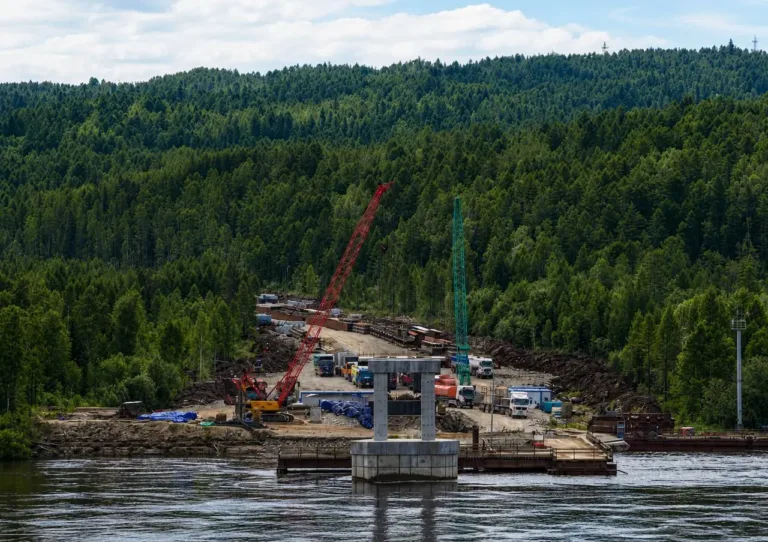
The Bodaybo district of Russia’s Irkutsk Region is set to end its long-standing transportation isolation. Polyus is constructing a permanent bridge across the Vitim River, replacing seasonal ferries and winter ice crossings with year-round access. Behind the infrastructure project lies the development of Sukhoi Log, Russia’s largest undeveloped gold deposit.
Today, the area is accessible only twice a year: by ferry during the summer and by ice road in winter. During the spring and autumn thaw, transportation is severely disrupted. The new 414-meter bridge will eliminate this bottleneck permanently. Construction is progressing on schedule, with three of the five bridge piers already completed while access roads are being built simultaneously.
Reliable transportation is needed not only for local communities but also for two of the region’s most important mining assets: the operating Verninskoye Mining and Processing Plant (GOK) and the future Sukhoi Log project.
Sukhoi Log is the largest undeveloped gold deposit in Russia and one of the largest globally. Commercial production is scheduled to begin in 2028–2029, with projected annual output ranging from 71.5 to 87 tonnes of gold. For comparison, that would account for more than one-fifth of Russia’s total annual gold production. The planned processing plant will handle 34 million tonnes of ore per year, making it the country’s largest gold processing facility.
According to Polyus, commissioning Sukhoi Log will increase Russia’s total gold production by more than 20%. The bridge across the Vitim River is the first—and essential—step toward making those production targets achievable.
The permanent Vitim crossing will transform what has long been a logistical dead end into a strategic transportation corridor. For the Bodaybo district, it marks the end of seasonal isolation. For Russia’s gold industry, it opens the gateway to developing one of the world’s most significant mineral resources.
Source: @CarierNews
Image: Polyus