Rosatom specialists at the Giredmet Institute have created a unique technology for recycling used lithium-ion batteries (LIB). The development is already ready for large-scale implementation in production, which is especially important in light of the growing amount of such waste.
Every year the world uses more and more lithium-ion batteries – they are used in electric vehicles, gadgets and industry. According to forecasts, in 5-10 years the volume of LIB waste will reach critical levels. Rosatom’s new technology makes it possible not only to recycle them, but also to return valuable metals to production.
The recycling process consists of several stages:
- The batteries are disassembled and sorted.
- From them the so-called “black mass” is extracted – a mixture lithium, cobalt, nickel and manganese.
- On special lines, the “black mass” is processed into metal salts, which can be used again in production.
The main advantage of the development is its versatility. It works effectively with “black mass” of various compositions, which simplifies the recycling of batteries of various types.
The uniqueness of the project lies in the speed of its implementation: a laboratory installation with a capacity of 30 kg of “black mass” per day was created in less than two years. Now similar lines are already operating at enterprises in the USA, Canada, China and Europe.
The introduction of technology will solve two problems at once:
- Reduces the volume of hazardous waste.
- Will provide industry with valuable raw materials.
This is an important step towards creating a circular economy, where waste becomes a resource. With developments like these, the future of recycling looks more sustainable.
Source: @nerzhavey
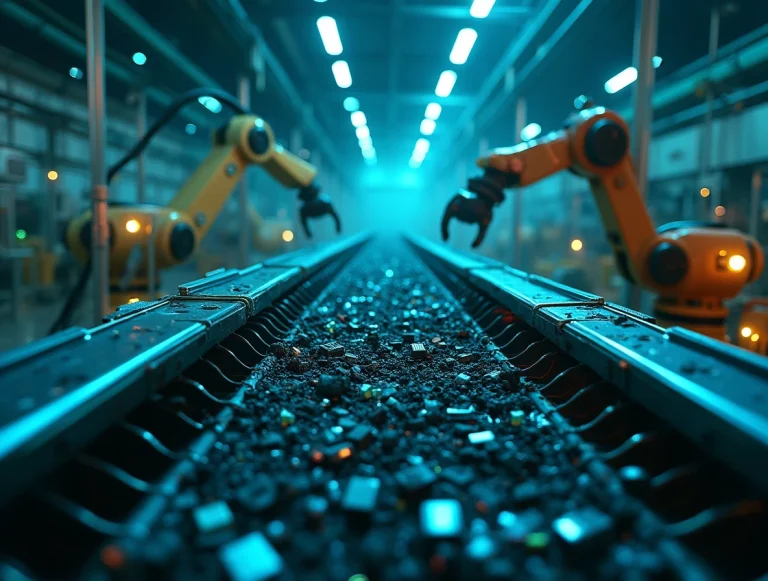
Image generated by a neural network