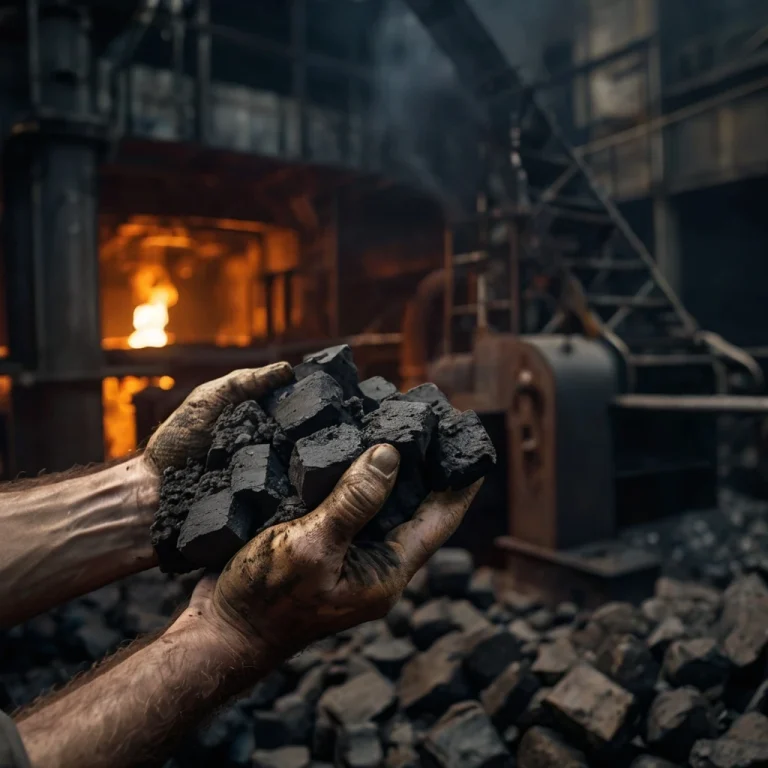
Scientists NUST MISIS has developed an innovative method to reduce the carbon footprint in the production of cast iron. The technology does not require expensive modernization of plants – it is enough to add special ore-coal briquettes to the raw material.
Ferrous metallurgy remains one of the key sources of greenhouse gas emissions. Traditional methods of reducing the harmful impact on the environment have practically exhausted themselves, and the transition to hydrogen technologies requires a complete restructuring of production. Russian researchers have proposed an economical and effective solution – the use of ore-coal briquettes in blast furnaces.
The extrusion agglomeration technology developed at NUST MISIS is already successfully used at enterprises in Russia, Kazakhstan, Malaysia and other countries. In Lipetsk, for example, up to 700 thousand tons of such briquettes are produced annually. Their main advantage is their unique structure, which ensures tight contact between coal particles and iron ore. This speeds up chemical reactions in the furnace and reduces the need for additional fuel.
According to experts, replacing even 10% of ore raw materials with briquettes can significantly reduce the consumption of coke and sinter. For every ton of pig iron, 52 kg of coke and 101 kg of sinter are saved, which not only reduces carbon dioxide emissions, but also reduces production costs.
New technology opens up prospects for more environmentally friendly and cost-effective production metal. The implementation of the development will help metallurgical enterprises meet strict environmental standards without serious financial investments.
Source: naked-science.ru
Image generated by a neural network