Rosneft specialists made a breakthrough in geological research by introducing a digital assistant based on artificial intelligence. The new technology speeds up core analysis by 5–7 times and minimizes errors.
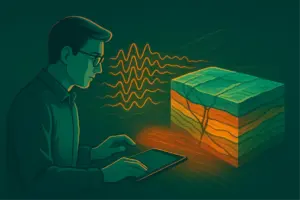
The Tyumen Petroleum Research Center (part of Rosneft) has developed the LitoText service, which automatically recognizes 16 key parameters of the core – from rock type to fracturing. An algorithm based on large language models (LLM) analyzes geological reports, processes new data and checks old records in the databases.
Advantages of the technology:
- Reducing the influence of the human factor;
- Increasing the accuracy of research;
- Fast analysis of even large volumes of data.
The Rosneft Core Research Center (CRC) in Tyumen stores 52 km of samples – this is one of the largest core storage facilities in the world. All data is consolidated in the RN-LAB system, which allows you to quickly use it for development deposits.
The company is actively introducing digital technologies into core studies:
- In 2022, a unique software package for digital analysis was launched (there are no analogues in the world);
- A microtomograph with a resolution of up to 3 microns has been developed for detailed study of rocks;
- In 2024, a mesotomograph was put into operation, digitizing 4 meters of core per hour.
The use of AI in geology opens up new opportunities for oil production. Rosneft technologies not only speed up processes, but also increase their accuracy, which in the future optimizes field development.
The material was prepared with the support of the Russian Ministry of Education and Science as part of the Decade of Science and Technology
Source: neftegaz.ru