Researchers have confirmed that Roman miners around 1,700 years ago used a large-scale hydraulic system to extract gold in the eastern Pyrenees. The evidence was found in reservoir sediments at the Les Guilleteres d’All archaeological site in Catalonia’s Cerdanya valley. The results were published in the journal Land.
According to the scientists’ estimates, the mining works moved about 2 million cubic meters of earth. Artificial gullies, trenches, and a semicircular cut roughly 300 meters wide remain at the site.
Specialists from the University of A Coruña and the Autonomous University of Barcelona identified the remains of a water management system. Water flows were directed through gold-bearing deposits, washing out ancient alluvial rocks and allowing fine particles of metal to be recovered.
The complex long puzzled archaeologists: the terrain clearly pointed to Roman engineering, but there was no direct evidence of when it was used. Excavations in 2010–2022 uncovered a reservoir about 4.5 meters in diameter and 1.5 meters deep. It was held by a dam made of large stone blocks, a structure that accumulated and regulated water for washing the rock.
After the miners abandoned the system, sediment gradually built up inside, preserving traces of the final stages of operation. Two samples were analyzed using optically stimulated luminescence, a method that measures signals in quartz mineral grains since their last exposure to sunlight. The accumulation of the sediment was dated to the 2nd–4th centuries AD, which is consistent with the Roman presence in the region.
However, the dates do not show when mining began or when it ended. The samples were taken from layers deposited after the reservoir had already gone out of use, so they date the infrastructure, not the entire period of operations.
The scale points to serious engineering capability: the miners cut channels and redirected water across complex mountain terrain beneath peaks of nearly 2,900 meters. Unlike underground mining, the hydraulic method broke up rock with controlled flows, exposing the gold. The cuts and artificial channels are still visible.
The find may explain the economic importance of Iulia Libica, a Roman settlement near the mines corresponding to modern Llívia. It is the only documented Roman town in this part of the Pyrenees and may have administered local resources.
Written sources support the idea of local mining. Pliny the Elder described the mineral wealth of the Pyrenees, and the poet Martial mentioned gold in the area of Iulia Libica. Archaeology adds details: a metalworking workshop was found at El Castellot de Bolvir, and a gold bracelet weighing about 23 grams was found in a nearby Roman necropolis. These finds do not prove a direct link to Les Guilleteres, but they confirm that precious metals and their working were part of the local economy.
The researchers also noted a possible chronological link between the decline of mining and changes in Iulia Libica: part of the settlement was abandoned at about the same time. Whether the cause was the closure of the mine or broader economic and political shifts remains unclear.
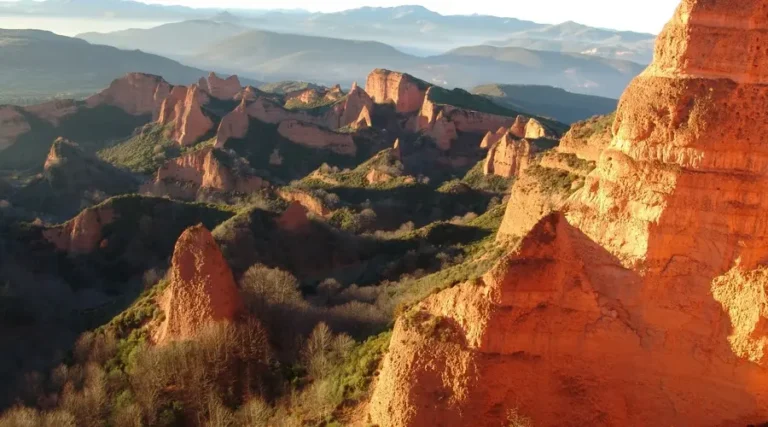
The work sets clearer chronological boundaries for Roman hydraulic mining in the eastern Pyrenees. Further excavations will help clarify how the network operated, when mining began, and whether Iulia Libica managed it. But it is already clear that Roman mining extended far beyond well-known centers like Las Médulas.
Source: MINING.COM
Image: Rafael Ibáñez Fernández