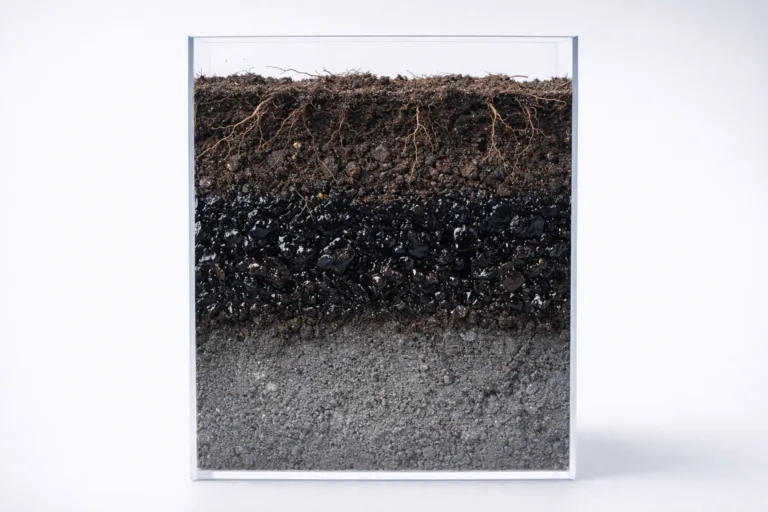
Researchers from Surgut State University have developed a technique that sees what previously remained invisible to ecologists. Conventional tests miss the most dangerous and resilient oil components. Because of this, the real damage to nature turns out to be much more serious, and the time frame for soil restoration is delayed for years.
Now samples are tested mainly for light oil fractions. They quickly evaporate or decompose. And heavy substances – resins and asphaltenes – settle as dead weight. They firmly adhere to soil particles, fall to the bottom of reservoirs and poison the ecosystem for decades. Formally, pollution is no longer recorded, although the soil does not breathe, does not allow water to pass through, and is not restored.
A team of scientists led by Yuri Turov from Surgut State University proposed to dig deeper. They adapted the SARA analysis method, which was previously used only by geochemists to study the composition of oil. Now this technology has been applied to environmental control. This method crushes the pollution into fractions: saturated and aromatic hydrocarbons, resins and asphaltenes. It becomes clear not only how much has spilled, but also what exactly has spilled and how long it will take to kill the earth.
One more important detail. Usually the sample is dried for several days in the laboratory. During this time, the light components evaporate, and the picture becomes blurred. Surgut researchers analyze the soil while it is wet, just like in nature. The data is more accurate.
Each contaminant, like a fingerprint, has a unique chemical profile. The new technique allows you to compare the composition of the sample with samples from pipelines or wells. If a spill occurs, it is now easier to find the culprit.
Analysis costs will increase by about a quarter. But the benefits outweigh the costs. Oil companies and supervisory authorities will receive a transparent instrument. It will be impossible to write off the spill as something that “evaporated quickly” and avoid responsibility. You’ll have to really clean it.
Source: ugra-news.ru