Scientists at Chalmers University of Technology have developed a new technology for producing hydrogen from solar energy and water without the use of platinum. The method is based on the use of electrically conductive plastic and can reduce the cost of producing “green” hydrogen.
Platinum is traditionally used as a catalyst in hydrogen production processes, but its reserves are limited, production is expensive and associated with environmental risks. In addition, metal production is concentrated in a few countries, making the industry dependent on supplies.
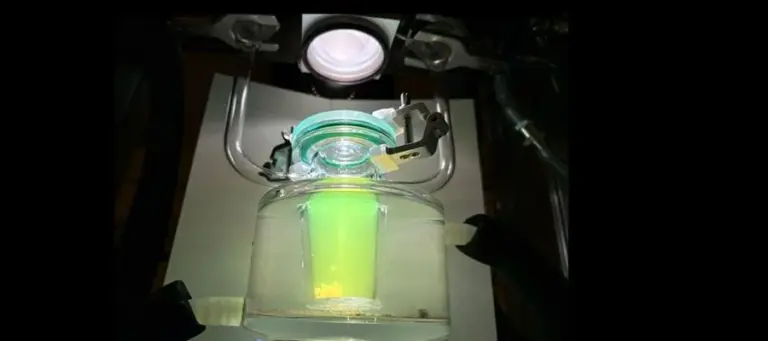
The new technology is based on the use of tiny particles of electrically conductive plastic. These particles are immersed in water and, under the influence of light, trigger the process of hydrogen formation. In a laboratory reactor, the process is visible to the naked eye: when the liquid is illuminated, gas bubbles almost immediately appear, which are then collected in a storage tank.
The key feature of the method is special processing of the material at the molecular level. Scientists have changed the structure of so-called conjugated polymers to make them more water-friendly. As a result, the plastic turns into nanoparticles with a looser structure that interact better with water and more efficiently convert sunlight into hydrogen.
According to researchers, just one gram of polymer material can produce about 30 liters of hydrogen per hour. This demonstrates the technology’s potential to scale and reduce costs.
A separate area of work is related to reducing the cost of the material itself. The group’s colleagues showed that electrically conductive plastics can be synthesized without toxic substances and at lower cost.
The reaction now uses vitamin C, which supports the process by donating electrons. The next goal of scientists is to completely abandon auxiliary substances and achieve direct splitting of water into hydrogen and oxygen using only sunlight. Researchers estimate this may take several years.
The development of Swedish scientists opens the way to more affordable and environmentally friendly hydrogen production. Eliminating platinum could make solar hydrogen an important element of the future energy sector.
Source: neftegaz.ru
Photo: Chalmers University of Technology, Sweden