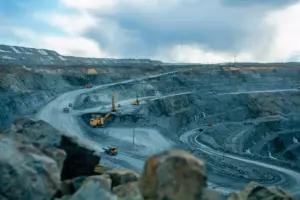
The first batches of rare earth metals from the Afrikandskoye deposit in the Murmansk region are planned to be released in 2027. This is an important step for the development of Russian industry and reducing dependence on imports.
The company “Arkmineral-resource” announced the start of pilot industrial development of the Afrikandsky deposits rare earth metals (REM). Already in 2027, the first pilot deliveries of titanium dioxide, niobium and tantalum compounds, as well as rare earth concentrate will begin. All products will be intended for Russian enterprises.
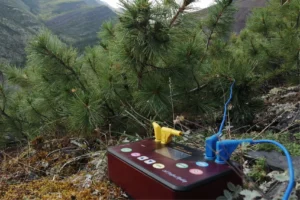
As the company’s general director Andrey Trenin explained, trial batches are necessary to debug the technology and clarify customer requirements. Industrial companies will be able to identify the right product brands, and subsoil user — better understand the structure of future demand. It was decided to carry out all tests on the basis of the Kola Scientific Center of the Russian Academy of Sciences, where there is a special semi-industrial installation.
Full production launch is planned for 2030. By this time, the entire mining and processing plant should be built. Already in 2028, construction of a quarry, processing plant, metallurgical complex and tailings dump will begin. The main facilities are planned to be commissioned in 2029.
The Afrikanda deposit, with reserves of about 600 million tons of ore, has enormous potential. With an annual production volume of 1 million tons, the enterprise will be able to produce approximately 66.7 thousand tons of titanium dioxide, up to 1030 tons of niobium and tantalum, as well as about 3900 tons of rare earth concentrate. In the future, mining capacity can be increased to 5 million tons of ore or more.
In the future, a rare earth cluster can be created on the basis of the deposit and a plant can be built to produce high-purity metals. The implementation of this project will strengthen Russia’s position in the global market for strategic raw materials.
The material was prepared with the support of the Russian Ministry of Education and Science as part of the Decade of Science and Technology.
Source: @dprom
Photo: spb.vedomosti.ru