Modern technology depends on a tiny but incredibly important material base. We are talking about only 34 grams of rare earth elements required per person per year. This figure seems tiny, but it is precisely what underlies technological progress and state sovereignty.
Despite their name, rare earth elements are not that rare in nature. Some of them are as common as copper or nickel. The main difficulty lies not in extraction, but in the most complex technologies for their processing and precise application. Control over these processes is the key to leadership.
The bulk of these elements are used to create components without which our daily life is impossible.
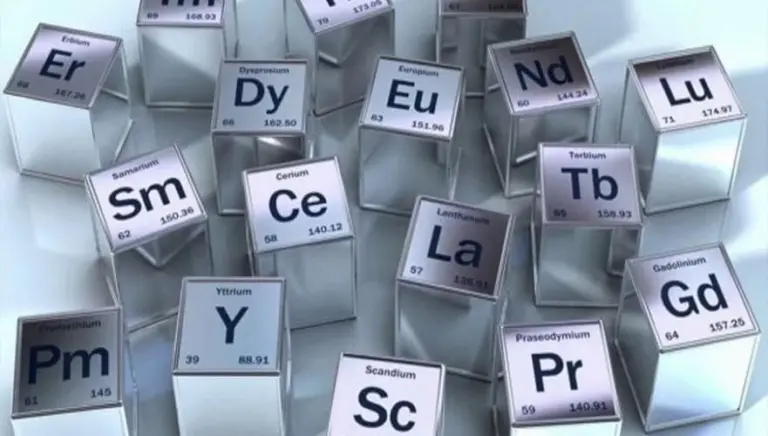
- More than half (10–12 grams) is neodymium for ultra-strong permanent magnets.
- Approximately 3–4 grams are occupied by praseodymium and europium.
- About 1.5 grams is dysprosium.
- 1 gram each of terbium and gadolinium is required.
- The rest is yttrium, lanthanum and cerium, which make bright screens, extra-strong glass and advanced optics possible.
These substances are almost never the main material. They work as highly effective additives that dramatically improve the properties of equipment, making devices more powerful, compact and energy efficient. In fact, the treasured grams are being turned into miniature electric vehicle motors, wind turbine generators, smartphone speakers and laptop displays.
Today, technological independence is measured not by the volume of mined ore, but by the ability to manage the entire chain – from deep processing of raw materials to the creation of a finished high-tech product. Controlling these 34 grams per capita means controlling the future of the digital economy, green energy and defense complex. This is a challenge that determines the positions of countries on the world stage.
Source: @metalsesgtrends