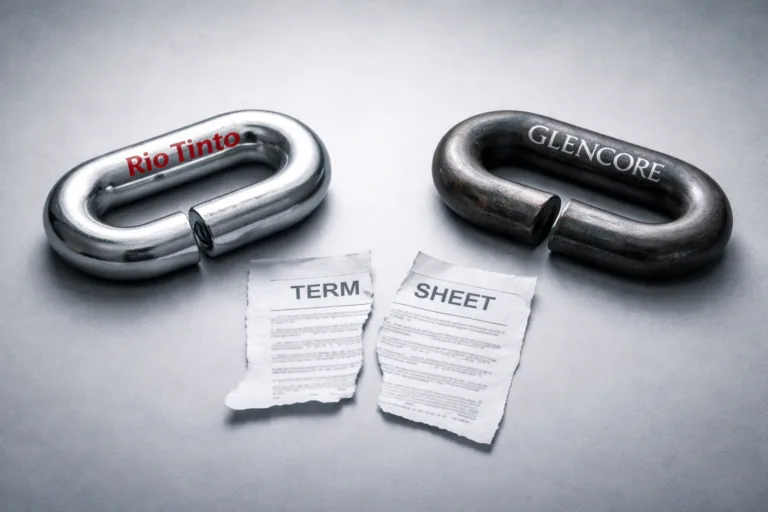
Negotiations over a possible mega-merger between two mining giants, Rio Tinto and Glencore, have ended just before they began. The parties could not reach an agreement on the key issue – fair valuation of assets and the management structure of the future company.
The companies announced the end of discussions less than 24 hours after they resumed. The official reason Rio Tinto cited was the inability to reach an agreement that would bring sufficient benefit to its shareholders.
At the heart of the conflict was a dispute over the balance of power and cost. Rio Tinto, whose market capitalization is more than double Glencore’s, has insisted on a dominant role in the combined company, offering to retain both its chairman and chief executive positions. Glencore, in turn, viewed the deal as a merger of equals and proposed a model with separate control.
This leadership dispute was merely a reflection of a deeper disagreement—the assessment of each side’s contributions. Rio Tinto proposed a division of share capital in the proportion of approximately 69% to 31% in its favor. Glencore considered this to be a low valuation, especially given its copper pipeline, and insisted on a 40% stake.
Strategically, the merger was extremely attractive. It would allow Rio Tinto to dramatically increase copper production and diversify its business away from dependence on iron ore. Glencore would have access to the scale and stability of an industry leader. However, a compromise on price was never found.
One of the most talked about potential deals in the global mining industry has fallen through. Its collapse was the result not of the personal ambitions of the leaders, but of a fundamental difference in views on the value of companies and the current market conditions. Until these factors change, a global unification of giants will remain just a fantasy.
Source: MINING.COM