Paleontologists have discovered fossilized traces of ancient microbes in the mountains of Morocco in a place that completely changes ideas about the conditions for the origin and preservation of early life on Earth. These 180-million-year-old structures were located at depths where sunlight could not penetrate.
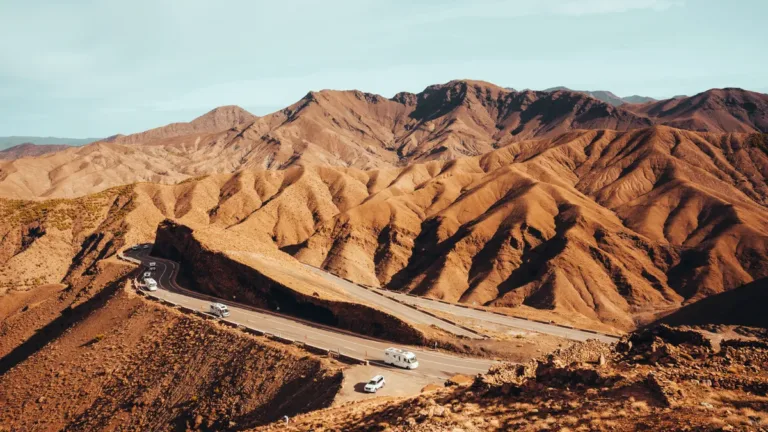
The amazing discovery was made almost by accident. Researcher Rowan Martindale from the University of Texas was studying ancient reefs in the Dades Valley when noticed under my feet characteristic wrinkled patterns on the stone.
These were typical traces that microbial mats—communities of bacteria—leave on sediment. However, such imprints are usually found in rocks formed in shallow waters, where there was enough light for photosynthesis. The structures discovered in Morocco were in turbidites – deposits formed as a result of underwater landslides at a depth of at least 180 meters.
As Martindale points out, such structures should not exist in such a deep-sea environment. Chemical analysis of the rocks showed a high carbon content, which confirms their biological origin. Scientists have concluded that these ancient microbes were chemosynthetics: they received energy not from the sun, but through chemical reactions of sulfur or other compounds.
Underwater landslides could create a breeding ground for them, bringing organic material from the continental shelf. Microbial communities flourished in the intervals between these events, and then some of their traces were preserved forever under new layers of sediment.
This discovery is forcing scientists to reconsider their approach to searching for the earliest forms of life on Earth. It indicates that traces of ancient life could have been preserved not only in shallow waters, but also in deep-sea sediments, which significantly expands the search area and gives new hope for important discoveries.
Source: Live Science
Image: Francesco Riccardo Iacomino