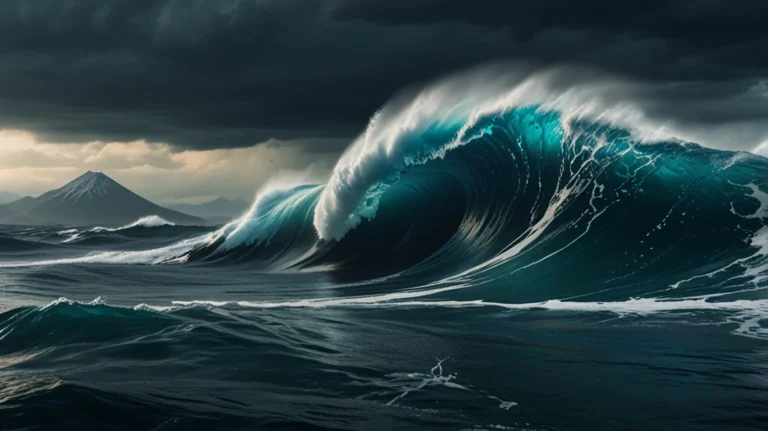
Гигантские волны бушуют в океане на фоне тёмных грозовых облаков и далёкой горы с заснеженной вершиной

Tsunami forecasting technology: Siberian scientists have developed a fast algorithm

25.03.2025
Reading time: 2 min
0

Scientists from Novosibirsk have created a system for quickly calculating the consequences of a tsunami. The development makes it possible to predict wave height just a few minutes after an earthquake, which is critically important for the coastal regions of the Far East and Asia. 

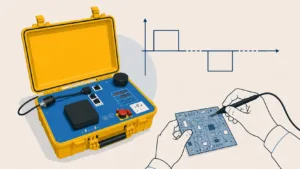
Specialists from the Institute of Automation and Electrometry SB RAS (IA&E SB RAS) together with the Institute of Computational Mathematics and Mathematical Geophysics SB RAS (ICM&MG SB RAS) have developed a unique tsunami modeling technology. Their system uses a special coprocessor based on FPGA (field programmable gate arrays), which is comparable in computing speed to supercomputers. 

How does forecasting work?

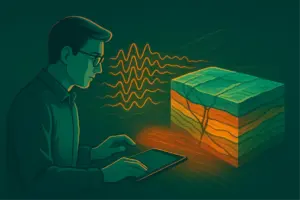
– Sensors on the ocean floor record changes in water levels with an accuracy of 1 centimeter. 

– The new algorithm analyzes data already after 25% of the wave has passed, which speeds up calculations. 

– The magnitude of the earthquake, the topography of the bottom and the displacement of tectonic plates are taken into account. 

This system is especially important for regions where a tsunami reaches the shore in 25–30 minutes – Kamchatka, Sakhalin, the Kuril Islands and Japan. Traditional methods cannot process data as quickly, which increases risks for the population. 

“Now most of the sensors are concentrated off the coast of Japan, where detailed data on the bottom topography has been accumulated. However, in the future, the technology can be adapted for the Russian services of the Ministry of Emergency Situations,” noted Mikhail Lavrentyev, head of the laboratory of the Institute of Automation and Energy of the SB RAS. 

The development of Novosibirsk scientists can significantly increase the accuracy and speed of tsunami warnings. In the future, they plan to use the system in high-risk areas, which will help save lives. 

Source: academia.interfax.ru

Image generated by a neural network

Prepared by —
Author avatar
Lyubov Cherkasova
Did you like this news? Share with friends
RELATED

Leave your comment


Editor-in-Chief
Maria Kostina
Maria Kostina
Geophysicist, founder of the project and editor-in-chief GeoConversation. Salt of the Earth
GO TO THE EDITOR'S COLUMN

GeoConversation. Salt of the Earth is a media platform where top mining-industry specialists share their experience, helping professionals communicate and collaborate more effectively.

Learn more about the project
TOP PROFESSIONALS
Исхак Фархутдинов

Iskhak Farhutdinov

V.I. Vernadsky State Geological Museum of the Russian Academy of Sciences
Academic Secretary
Александр Чеботарев — ведущий геолог, эксперт в геонавигации и сопровождении бурения. Более 5 лет опыта в нефтегазовой отрасли.

Alexander Chebotarev

Surgutneftegas
Lead Geologist
Ильдар Калько

Ildar Kalko

Moscow State University, Geokhimpoiski LLC
Senior Researcher, geochemist
VIEW ALL EXPERTS
CATEGORIES
SUBSCRIBE
If you would like to receive a monthly selection of fresh articles by email
LIKE THE PROJECT? SUPPORT US
Friends, developing the project takes a lot of effort and financial resources. If you like what we do, you can support us in two ways.
MORAL SUPPORT
Show our website to your friends. Just click on the social media icons below and share our website on your pages.
FINANCIAL SUPPORT
Even a small fee will help us pay for the transcription (audio to text) of an expert interview or the design of drawings, diagrams, and tables.
Send a donation
Got an article idea? Suggest it.
Cool! You have an idea for us. We love that, because only the experience and knowledge of an expert makes our articles useful for the reader. Please answer 5 questions to let us know a little more about you and the article
answer questions