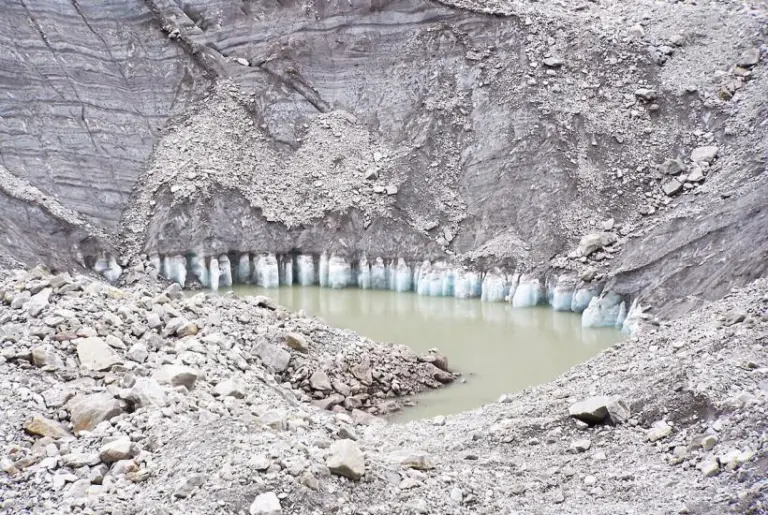
Scientists from the Russian Academy of Sciences (RAN) have discovered large deposits of molybdenum in the Arctic. The research was carried out in Lake Portlubole on the Kola Peninsula, and their results were published in the authoritative journal Doklady Earth Sciences.
Analysis of the sediments showed an unusually high molybdenum content – up to 137.1 mg/kg. This significantly exceeds the indicators of other reservoirs in the region. For example, in lakes Severnoye and Bolshoy Vudyavr the concentration metal is 24 and 15 mg/kg, respectively, and in Karelian lakes – only 1.6 mg/kg.
In addition to molybdenum, uranium, rare earth metals, cadmium, thallium, zinc and thorium were found in the sediments. Scientists attribute this wealth of minerals to granite rocks containing up to 600 mg/kg of molybdenum.
Russia already has significant reserves of molybdenum, most of which are concentrated in Siberia. The key enterprises in the industry are the Sorsky and Zhirekensky mining and processing plants. New discovery in the Arctic can strengthen the country’s position in the world market.
Let us recall that in March, President Vladimir Putin allowed the Soyuzmetallresurs (SMR) company to acquire 100% of the shares of these enterprises. SMR, part of the En+ Group, specializes in the production of ferromolybdenum.
Deposits of molybdenum found in Lake Portlebole expand the prospects for its extraction. This metal is widely used in metallurgy, electronics and defense industries. Further research will help assess the economic feasibility of developing fields in the Arctic.
Experts note that the development of new resources can strengthen Russia’s position in strategically important industries and reduce dependence on imports.
The material was prepared with the support of the Russian Ministry of Education and Science as part of the Decade of Science and Technology
Source: @nerzhavey
Photo: pravda.ru