Washington is stepping up its competition for South American resources. The US Export-Import Bank plans to finance Argentine critical minerals and energy projects with up to $7 billion. The funds will go toward purchasing American equipment and will strengthen US access to lithium, copper, and rare earth metals.
Reuters reported the plan, citing a document obtained by the agency. An official announcement is expected in New York during the UN General Assembly. Companies operating in Argentina are expected to be able to access the financing over a two-year period.
The initiative continues a systematic US policy of securing raw materials for energy, defense, and high-tech industries. According to estimates, since January 2025 the US government has directed more than $1 billion toward investments and loans in Latin American critical minerals. Securing raw material supplies has become a national security priority on par with the energy transition.
In February, the US and Argentina announced a critical minerals agreement, though the South American country’s parliament has not yet ratified it.
Argentina is trying to attract major projects through the RIGI regime, launched in July 2024. It provides tax, customs, and currency stability for investments of $200 million or more. The first mining project approved under this scheme was Rio Tinto’s $2.5 billion Rincón lithium project.
n March, IDB Invest, part of the Inter-American Development Bank group, announced a loan of up to $100 million for Rincón as part of a broader $1.175 billion financing package. BHP is developing copper projects in Argentina, while Chevron operates in the shale oil and gas segment.
Mining Minister Luis Lucero previously told Reuters that by 2036, Argentina could export 580,000 tonnes of lithium and 1.64 million tonnes of copper annually.
The EXIM package hasn’t been officially announced yet, but its outlines are already clear. The US is willing to pay for access to Argentina’s mineral wealth, making the country a key link in the Western critical minerals supply chain.
Source: Reuters
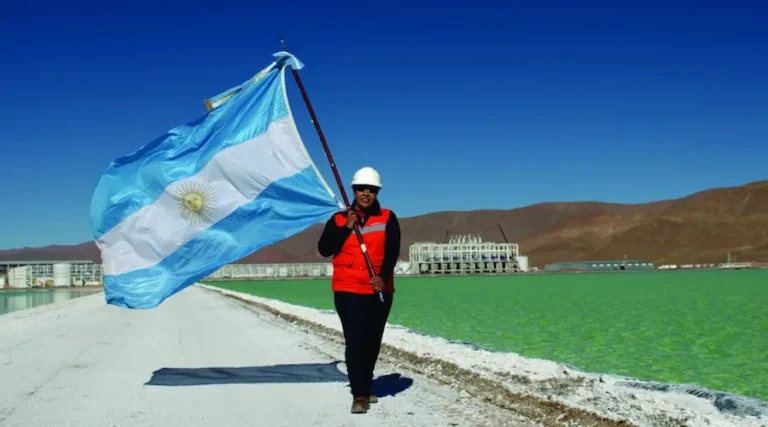
Image: Argentina’s Ministry of Mining