In the second half of the 21st century, the Northern Hemisphere may face a small ice age. Russian and Finnish scientists came to this conclusion after analyzing centuries-old data on solar activity and climate change.
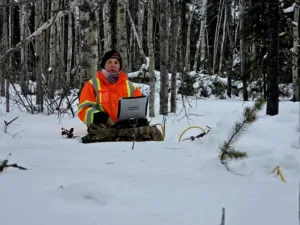
Specialists Kola Science Center RAS Together with Finnish colleagues, they conducted a study based on the analysis of ancient tree rings. The scientists used the ultra-long dendrochronological scale FLTR, spanning more than 7,500 years. This made it possible to identify the connection between solar cycles and climate fluctuations.
Most modern climate models take into account mainly anthropogenic factors such as greenhouse gas emissions. However, natural processes, including solar activity, also play a key role. The Russian-Finnish team used neural networks with long short-term memory (LSTM) and wavelet analysis to predict climate change in the Euro-Arctic region.
The results showed that significant cooling could occur between 2063 and 2073. This is due to the approach of the main solar minimum – a period when solar activity decreases sharply. A similar phenomenon was already observed in the 17th–18th centuries (Maunder Minimum), when Europe experienced abnormally cold winters and rivers froze.
Scientists emphasize that even against the backdrop of global warming, natural cycles can make serious adjustments. Declining solar activity could lead to extreme winters and impact agriculture. In addition, the reduction of ice cover in the Arctic, on the one hand, will open up new shipping routes, and on the other, threatens local ecosystems and the lives of indigenous peoples.
Researchers are calling for natural factors to be taken into account when developing climate models. Although global warming remains a major threat, possible cooling in the Northern Hemisphere requires attention and preparation.
Source: minobrnauki.gov.ru
Image generated by a neural network