Idaho’s Silver Valley mountain region has produced about 1.2 billion ounces of silver since the late 19th century—enough to cast a solid cube as tall as a five-story building. Huge amounts of lead and zinc were also mined here. But until now, geologists could not explain exactly how these wealth. New research from Washington State University sheds light on processes that began more than 1.2 billion years ago.
Scientists have found that ancient brines—super-salty waters left after the evaporation of shallow seas—played a key role. They seeped deep through natural channels in the rocks, gradually concentrated metals in themselves and rose closer to the surface, where mining is carried out today.
The study was published in the journal Chemical Geology. Its authors are geologists Johannes Hammerli and his former student Isabelle Rein from the University of Washington. The work provides not only a new understanding of geological history, but also a practical tool for searching for new deposits. Chemical fingerprints from ancient brines may reveal where deposits of silver, lead, zinc and cobalt are hidden.
The study area is the so-called Belt Supergroup, a giant rock mass that stretches across eastern Washington, Idaho and Montana. The famous Idaho Cobalt Belt, the largest cobalt province in the United States, is also located here.
For a long time, geologists linked the formation of these rich ores to deep-seated heat, pressure and magmatic activity, but were unable to determine exactly what fluids transported the metals or where they came from. To solve this mystery, researchers turned to the mineral scapolite. It works like a natural archive: when formed, it captures chemical traces of surrounding liquids and preserves them for billions of years.
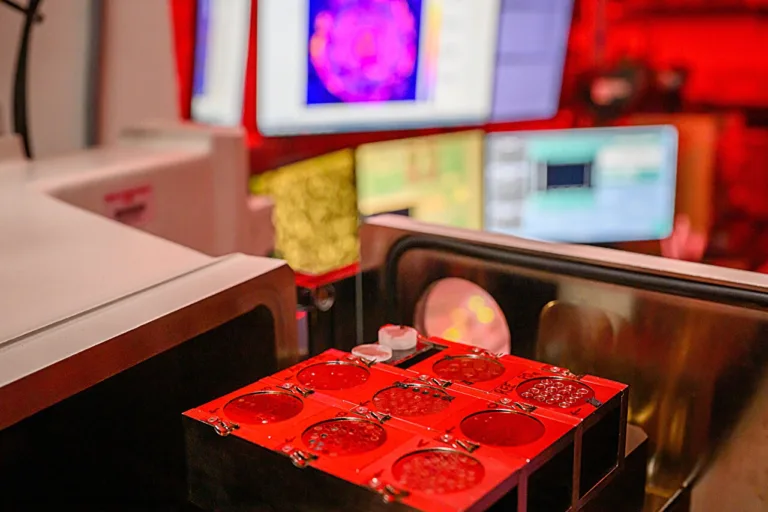
Isabelle Raine collected samples of scapolite from outcrops in central and northern Idaho. She then analyzed them in WSU laboratories using an electron microprobe and mass spectrometer. The equipment allows you to see the smallest chemical differences inside the crystals. Working with instruments, including night sessions, became a real school of research for the young scientist.
The results showed that after the shallow seas evaporated, a superconcentrated brine remained. When the Belt Basin later underwent metamorphism, much of the salt was locked into scapolite, and the dense brine residues were driven deep into the earth’s crust. Heated and saturated with salt, these liquids became ideal solvents for metals. Later, climbing along cracks and faults, they deposited metals in the form of rich veins – the same ones that miners develop today.
Interestingly, some layers of the Belt Supergroup rocks still contain huge amounts of salt preserved in scapolite for over a billion years.
For geologists, this discovery is a valuable landmark. If the same chemical signatures can be found in other regions, it will point to places where rich ore deposits may have formed. When searching for minerals, you can now ask the right questions: were the right fluids in the system, the right paths for them to move, and the right time.
The study not only reveals the mystery of Idaho’s giant deposits, but also provides tools for discovering new ones.
Source: phys.org
Image: Robert Hubner