Chile’s state development agency Corfo will allocate up to $5.8 million to direct lithium extraction and processing projects rare earth elements. Authorities expect to accelerate the introduction of new technologies and turn mining waste into a source of valuable resources.
Corfo supported two research projects focused on the development of mining technologies. The first of them will receive up to $1.9 million for up to two years. Its mission is to select and test direct lithium extraction technologies suitable for brines from the salt marshes and saline lagoons of Chile. Scientists will create a test platform and collect the first technical data in real conditions in the country.
The second project will be financed for up to $3.9 million over three years. It is dedicated to developing sustainable methods for extracting rare earth elements. The program will test chemical and biotechnological leaching methods. The work will be carried out under the supervision of Corfo.
According to the agency, Chile’s tailings and dumps may contain at least 46 thousand tons of vanadium, about 16 thousand tons of cobalt and significant volumes of rare earth metals. Therefore, recycling of industrial waste is considered a strategic direction that simultaneously reduces environmental risks and creates new sources of income.
Both projects are part of the R&D Challenges program, under which Corfo will co-finance up to 80% of the costs using lease proceeds from the Atacama Salt Flats. The agency emphasizes that the focus is on the principles of a circular economy – the transformation of environmental obligations into economic assets.
The funding comes amid growing interest in lithium in Chile. The country is already testing direct metal extraction, and public and private companies are creating joint projects in the Atacama Salt Flat. Authorities expect the new research will accelerate the emergence of commercially viable solutions and strengthen Chile’s position in the strategic minerals market.
Source: MINING.COM
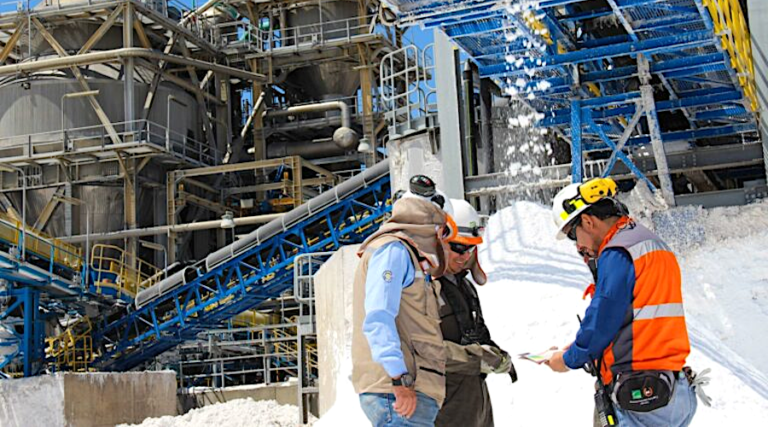
Photo: SQM