Beijing has unveiled the energy strategy of its 15th Five-Year Plan with an unprecedented budget. By 2030, half of China’s electricity is expected to come from non-fossil energy sources. For Russia, the new strategy presents both risks and opportunities for future energy exports.
The details were announced last Friday by a representative of China’s National Energy Administration. Total investment in key energy projects between 2026 and 2030 will exceed 20 trillion yuan—nearly $3 trillion. A day earlier, the National Development and Reform Commission approved a new package of environmental standards for end users.
The targets are ambitious. By the end of the decade, renewable energy and nuclear power are expected to generate 50% of China’s electricity. The plan also calls for a 10% reduction in energy intensity and a 17% reduction in carbon intensity across the economy.
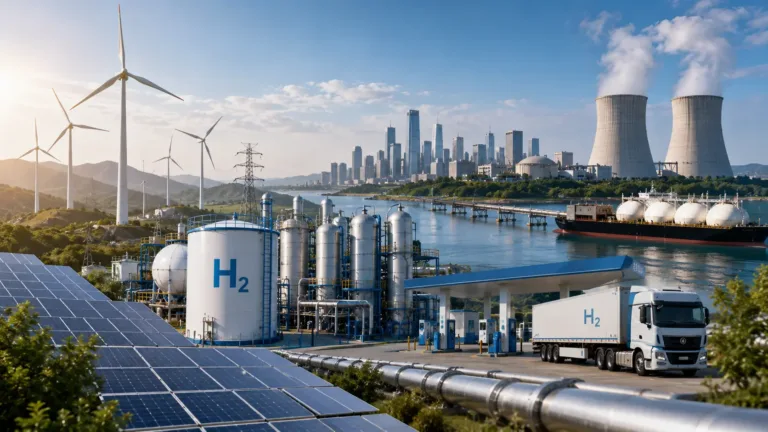
A major component of the strategy is the development of industrial hubs for green hydrogen, ammonia, and methanol production. China aims to produce 2 million tonnes of green hydrogen annually by 2030. Refineries and petrochemical facilities will undergo mandatory modernization, replacing fossil fuels with hydrogen and electricity where possible, while small modular nuclear reactors will be introduced for industrial heat generation. Heavy-duty freight transport is expected to transition to hydrogen refueling infrastructure and battery-swapping stations.
At the same time, China plans to expand its domestic natural gas production while accelerating the construction of major gas pipelines from Russia. Additional gas-fired power plants will be built to provide flexible balancing capacity for the country’s increasingly renewable-based electricity grid.
The strategy is expected to have significant global consequences. The rapid shift of China’s truck fleet toward natural gas and electric power is projected to reduce the country’s oil consumption by 4.9% as early as this year, putting long-term downward pressure on global oil prices. Meanwhile, massive investments in renewable energy and hydrogen technologies are likely to reinforce China’s dominant position as the world’s leading supplier of green energy equipment.
For Russia, the new policy marks a fundamental shift in the energy landscape. The plan explicitly calls for accelerating the construction of the Power of Siberia 2 gas pipeline, reflecting Beijing’s strategic interest in secure overland gas imports that are less vulnerable to geopolitical risks. China’s willingness to expand LNG import infrastructure, including the Longkou terminal, could also provide additional routes for Russian liquefied natural gas exports despite Western sanctions.
The strategy also opens the door to deeper cooperation in hydrogen. Russia possesses significant potential for low-carbon hydrogen production, while China has advanced technologies for hydrogen transportation, storage, and industrial deployment.
China’s energy transition sends a clear message: oil demand is expected to decline, while natural gas and hydrogen will play an increasingly important role in the country’s energy mix. For Russia, the plan highlights the need to accelerate the reorientation of its energy export strategy toward Asian markets.
Source: CDU TEK