While the world focuses on algorithms and computing power, a far less visible challenge is emerging—the enormous demand for raw materials. A single large-scale artificial intelligence data center consumes nearly 180,000 tonnes of mineral resources, with copper serving as the backbone of the entire digital infrastructure.
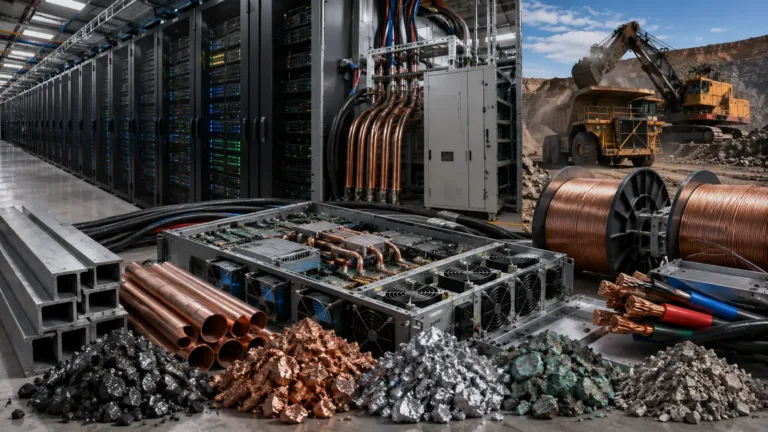
The numbers are striking. A 1-gigawatt AI data center requires 25 different minerals. Of the total 179,940 tonnes of raw materials, steel accounts for 132,660 tonnes, or 74% of the total. Copper ranks second, with 27,212 tonnes, representing about 15% of all construction materials.
Copper is far more than just another industrial metal. Every server, equipment rack, transformer, and kilometer of power cable depends on it. Without copper, artificial intelligence simply cannot be connected to the electrical grid.
Beyond steel and copper lies an entire portfolio of critical minerals totaling 14,320 tonnes. These include aluminum, graphite, nickel, cobalt, lithium, tin, and lead. Each plays an essential role, from batteries and cooling systems to soldering materials and protective coatings.
Now imagine multiplying these figures by hundreds. That is roughly the number of AI data centers currently planned or under construction around the world. Every additional gigawatt of computing capacity requires tens of thousands of tonnes of copper to be explored, mined, processed, refined, and delivered to construction sites.
This trend is turning mining companies into some of the least visible beneficiaries of the artificial intelligence boom. While investors chase shares of chip manufacturers, the real winners in the raw materials supply chain are operating mines, processing plants, and smelters. The physical foundation of AI is built not only on software and servers but also on an immense industrial infrastructure made of metal.
Before an AI model can generate a response, the Earth must first supply the copper, nickel, cobalt, steel, and other minerals that make the underlying infrastructure possible. The artificial intelligence revolution rests on a material foundation that is rarely discussed but is indispensable to the industry’s growth.
Source: @Metals_Mining