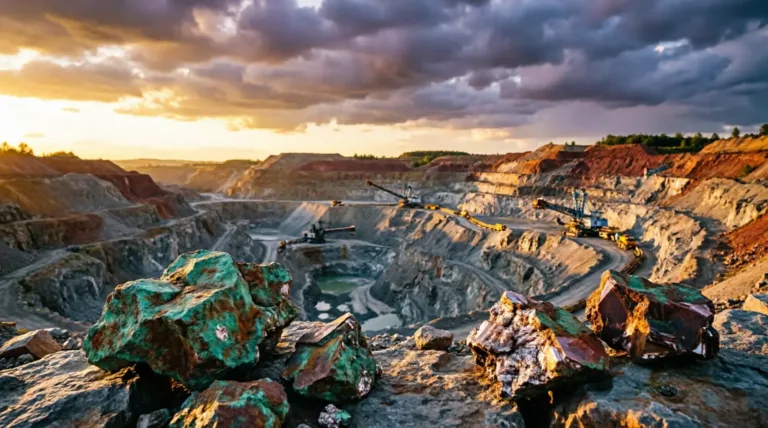
One of the mining industry’s most influential investors is sounding the alarm. Frank Giustra believes the world is heading toward a severe copper shortage, warning that only four world-class undeveloped copper deposits remain. None of them are owned by major mining companies, setting the stage for an intense race to secure these strategic assets.
Giustra, who has spent 45 years financing mineral exploration, presented stark projections. According to JPMorgan, the global copper deficit could reach 2 million tonnes by 2030 and expand to 8 million tonnes by 2035. Data centers alone are expected to consume around 500,000 tonnes of copper annually by the end of the decade. Meanwhile, bringing a new copper mine from discovery to production typically takes 10 to 20 years.
In Giustra’s view, the industry’s largest producers have missed their opportunity. Only four undeveloped deposits still meet the criteria sought by major miners in terms of size, grade, and near-surface mineralization: Copper Giant Resources in Colombia, Solaris Resources in Ecuador, and Aldebaran Resources and McEwen Copper in Argentina. Everything else is either deeper, more expensive to develop, or both. Giustra himself has invested in Copper Giant.
He argues that competition for critical minerals has evolved beyond commercial rivalry into a geopolitical contest. China began securing overseas mineral assets roughly 25 years ago, financing infrastructure projects across Africa and South America in exchange for mining rights. The United States and Europe, by contrast, only recently recognized the strategic importance of mineral supply chains. At the same time, resource-rich countries are tightening export controls, requiring more domestic processing, and making mine permitting increasingly difficult.
Ironically, the expected wave of mining mergers and acquisitions has yet to begin. Major producers still remember the expensive acquisitions made during the previous commodity supercycle, which ended around 2012. Rather than taking on exploration risk themselves, they prefer junior companies to handle exploration, permitting, and feasibility studies before acquiring advanced projects at substantial premiums. Giustra believes this cycle of aggressive acquisitions is inevitable—and that it will return.
The veteran financier also shared his outlook on gold. He sees the recent price pullback not as the beginning of a downturn but as a temporary liquidity-driven correction. Sovereign wealth funds, he argues, are selling highly liquid assets—including U.S. Treasuries—to raise dollars. At the same time, central banks continue reducing their dependence on the U.S. dollar by steadily increasing gold holdings. The dollar’s share of global foreign exchange reserves has fallen from 70% to 56%, while 68% of surveyed central banks intend to continue purchasing gold.
Giustra describes the world’s growing debt burden as a silent tax on society. He estimates global debt at around $350 trillion, arguing that governments are unlikely to reduce deficits through higher taxes or spending cuts. Instead, he expects further monetary expansion, fueling inflation and strengthening long-term demand for gold. He has been accumulating the metal since 2001, when gold traded at around $250 per ounce, and says he has never sold any of his holdings. Although he refuses to predict when prices will rise, he remains convinced that a significant appreciation is ahead.
According to Giustra, the world is entering an era of resource scarcity in which copper and gold are no longer merely commodities but strategic assets with geopolitical and financial importance. The four remaining world-class copper deposits may represent the most valuable opportunities for those who move first.
Source: MINING.COM