According to the International Energy Agency, demand for copper is growing due to the development of clean energy. The metal is used in the construction of wind farms, modernization of power lines, production of cables and transformers. By 2040, 80 million kilometers of power grids need to be created or replaced.
In 2024, global refined production is 27.6 million tons and mine production is 23 million tons. Each kilogram of metal has made its way to the world market. Why there is no one right way to obtain copper – we will analyze in the article.
Main methods of copper mining and production
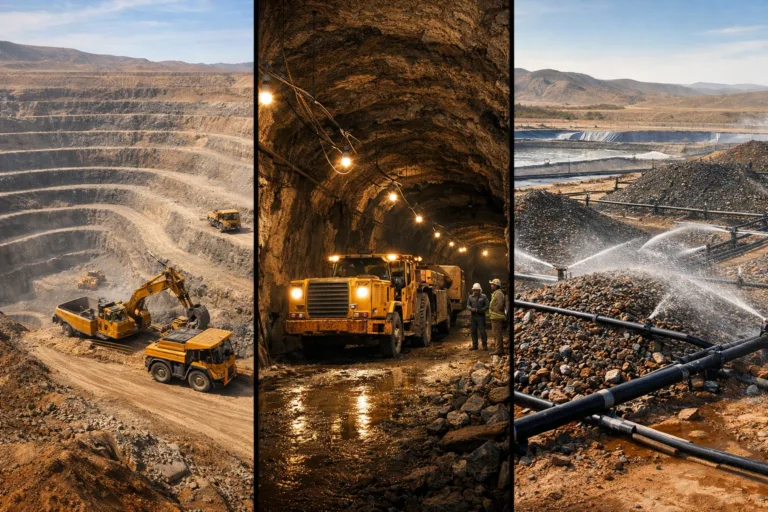
Copper is mined in three main ways: open pit, underground, leaching and electrolysis. Each of them is used under different conditions, depending on the depth of the ore, its composition and metal content.
Open pit copper mining
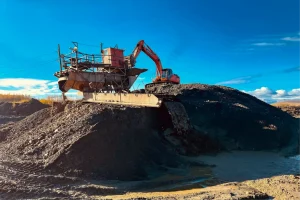
Open pit mining is used when the ore is close to the surface. The deposit is developed by open-pit mining – creating a large step-out pit. For example, the Bingham Canyon mine in the USA is about 1.2 km deep and almost 4 km in diameter.
Mining at the open pit is carried out in stages. First overburden is removed, then the ore is drilled and blasted, after which it is hauled out by dump trucks with a carrying capacity of up to 200-400 tons. This method remains the cheapest with large proven reserves and shallow depths.
Open pit mining is the main method of copper production in the global industry. In Chile, for example, about 88-90% of the metal is extracted by open pit mining, which is related to the type of deposits. Porphyry deposits contain 0.5-1% copper, but have huge volumes and are suitable for open pit mining.
Underground copper mining
Underground copper mining is used when the ore body is hundreds of meters deep or more, where open pit mining becomes economically or technically unfeasible. In this case, mines and tunnel systems are created: ore is drilled, blasted and extracted to the surface using hoists or conveyors. Modern mines can go 1-1.5 km underground. For example, the Grasberg deposit (Indonesia) is mined at a depth of over 1 km.
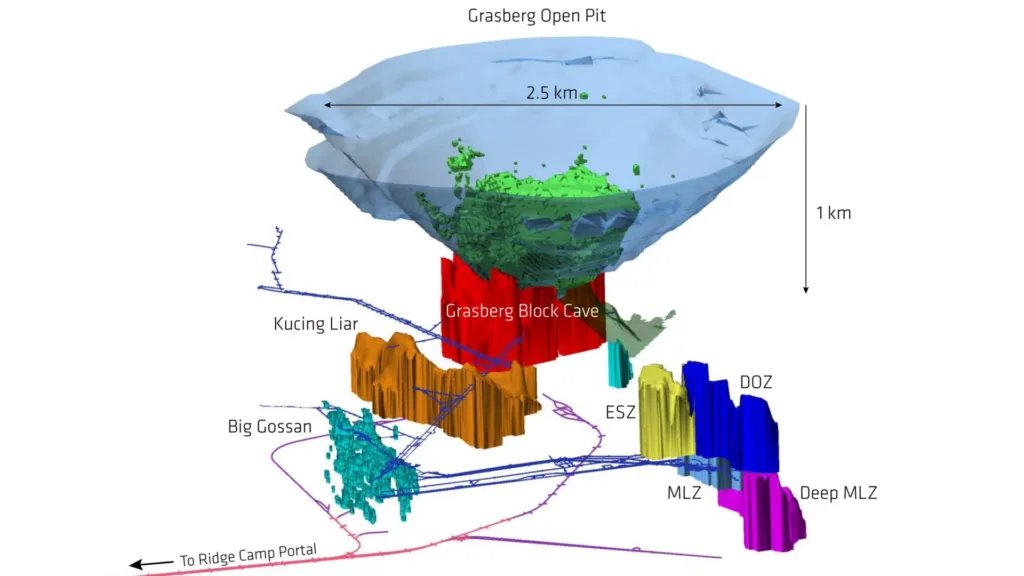
Underground mining is more expensive and more complex than open pit mining. Construction of mines takes an average of 3.2 years. However, underground mining extends the life of deposits by dozens of years.
For example, the Oyuu Tolgoi deposit (Mongolia) was first developed as an open pit, but the main reserves are deeper. The underground mine goes to a depth of more than 1.3 km and should yield up to 500 thousand tons of copper per year once it reaches full capacity.
Read also:
– Net Zero without illusions: why green energy is hindered by metal scarcity
– Without geology, there is no technological future: who and how will provide the world with metals?
– Arctic. There are reserves, but no economy
Leaching of copper and method of electrolysis of pure metal
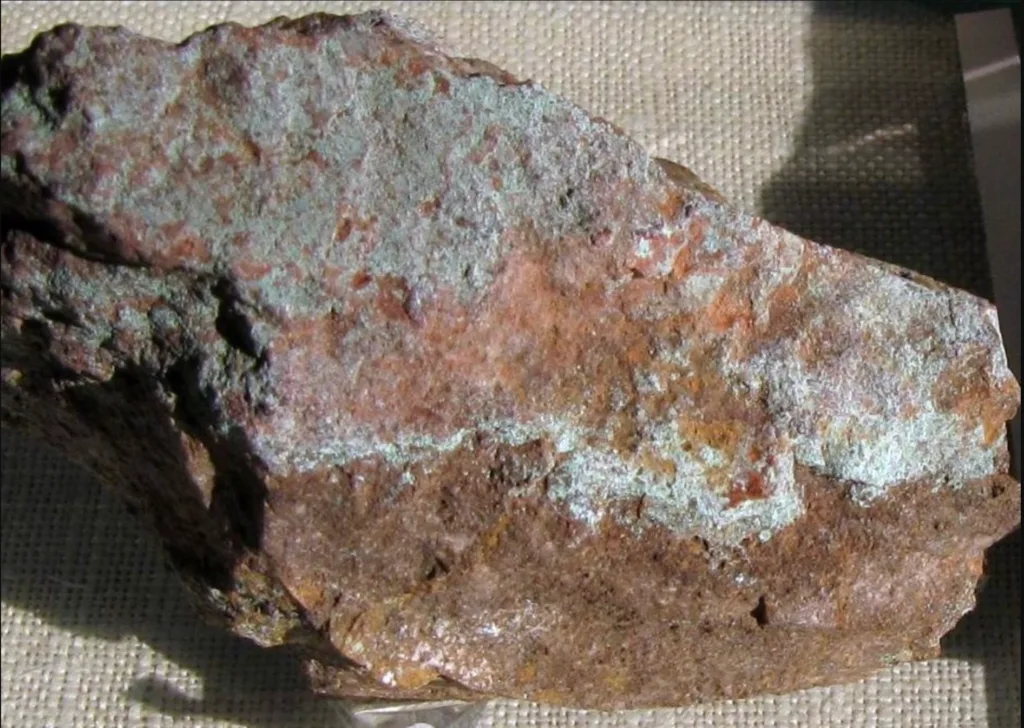
Leaching is a chemical method of extracting copper from solution. It is used when the grade is too low for open pit or underground mining, typically less than 0.5%.
The process is organized as follows: ore is crushed and placed in dumps, after which it is drenched with a solution of sulphuric acid. Further copper dissolves and passes into a liquid, which is collected and sent for processing. Thus, the metal is extracted using electrochemical methods – deposited on cathodes, using the method of obtaining copper by electrolysis.
Unlike open pits and underground mines, where ore is extracted and processed relatively quickly, leaching is a slower process. It can take anywhere from a few months to a couple of years, but it allows us to work with large volumes of raw materials that were previously considered waste. In Chile, for example, leaching produces about 1.5-2 million tons of copper annually, up to 26% of national production.
Leaching is a copper production technology used in conjunction with open pit and underground mining. The rich ore is extracted first, and then the poorer areas and dumps are processed. This allows additional metal to be extracted from resources that have not been used before.
Which companies are mining rare earth metals – Meet the market leaders who control more than just mining operations
How copper production methods are chosen
The method of copper mining is chosen according to the parameters of the deposit: depth of occurrence, metal content and ore type.
- Depth of occurrence. If the ore is close to the surface, it is mined by open pit mining. If the ore body goes hundreds of meters deep, underground mining is used.
- Copper content in ore. If the grade is around 0.5-1%, the ore is mined and sent for beneficiation and smelting – this is the classical scheme. If the grade falls below 0.5%, leaching is more commonly used to reduce processing costs.
- Ore type. Sulphide ores (the main type in the world) are processed through beneficiation and smelting. Oxidized ores are more easily dissolved, so leaching is used for them.
- Project economics. The choice is also influenced by economics: copper price, infrastructure and scale of reserves. For example, porphyry deposits with grades of 0.5-1% are quarried due to the large volumes of ore.
For example, the method of copper extraction is determined by a combination of geological conditions and project economics. Behind every method is a calculation: how to extract metal from ore with a grade of 0.5% and below and still save money.
Would you like to see how a kilometer deep open pit mine works or how pure copper is produced from solution? Or maybe you have already been to the mines – what was the most memorable? Tell us in the comments.