Iron and steel account for about 95% of the total volume of metals produced in the world, so the leading iron ore producing countries largely determine how industry works – from construction to transportation. Let’s look at the example of the largest market players to see who produces the most iron ore and why the world ranking has not changed over the years.
Top 5 leading countries in iron ore production
In 2024, global iron ore production exceeded 2.6 billion tons, with the bulk coming from just a few countries in the world: Australia, Brazil, China, India and Russia.
The main production volumes are concentrated in countries with the largest deposits and developed infrastructure. Although the Pilbara region in Western Australia and deposits in the Brazilian state of Minas Gerais are primarily for export, it is not just geology that matters. Australia and Brazil have access to the ocean and developed ports, so they can ship ore to Asia in large volumes.
| Country | Production, millions of tons |
| Australia | 920-960 |
| Brazil | 440 |
| China | 270-280 |
| India | 270 |
| Russia | 90-100 |
Australia and Brazil not only produce more than the others, but also control exports. The former accounts for about 55% of the world’s seaborne iron ore shipments, and the latter for another 24%.
India, despite high mining volumes, uses most of the raw material domestically for its own steel production. China not only extracts the raw material itself, but also imports about 1.2 billion tons of ore per year and remains the largest buyer.
Magnetite, hematite, brown ironstones, siderite – read this articleRead this article to learn the differences between types of iron ore
Why some countries in the world produce more iron ore than others
Huge proven reserves do not guarantee leadership. There are locations with iron ore in dozens of countries, such as Sweden, Canada or Kazakhstan, but the top positions are held by those where mining is economically profitable and developed.
Scale and quality of stocks
The difference starts with the characteristics of the deposits themselves in the countries. Iron ore reserves in Australia are estimated at about 50 billion tons, in Brazil at about 34 billion tons.
Not only the volume, but also the iron content is important. In Brazil, ore with a 65% Fe content is widespread, for example in the Carajas region. In many other countries with iron ore, such as China, this figure is often below 35%, so the raw material has to be further beneficiated. This increases costs and reduces the competitiveness of mining.
How the junior segment was born, which took over the early stage of exploration – the read the article
Logistics and market access
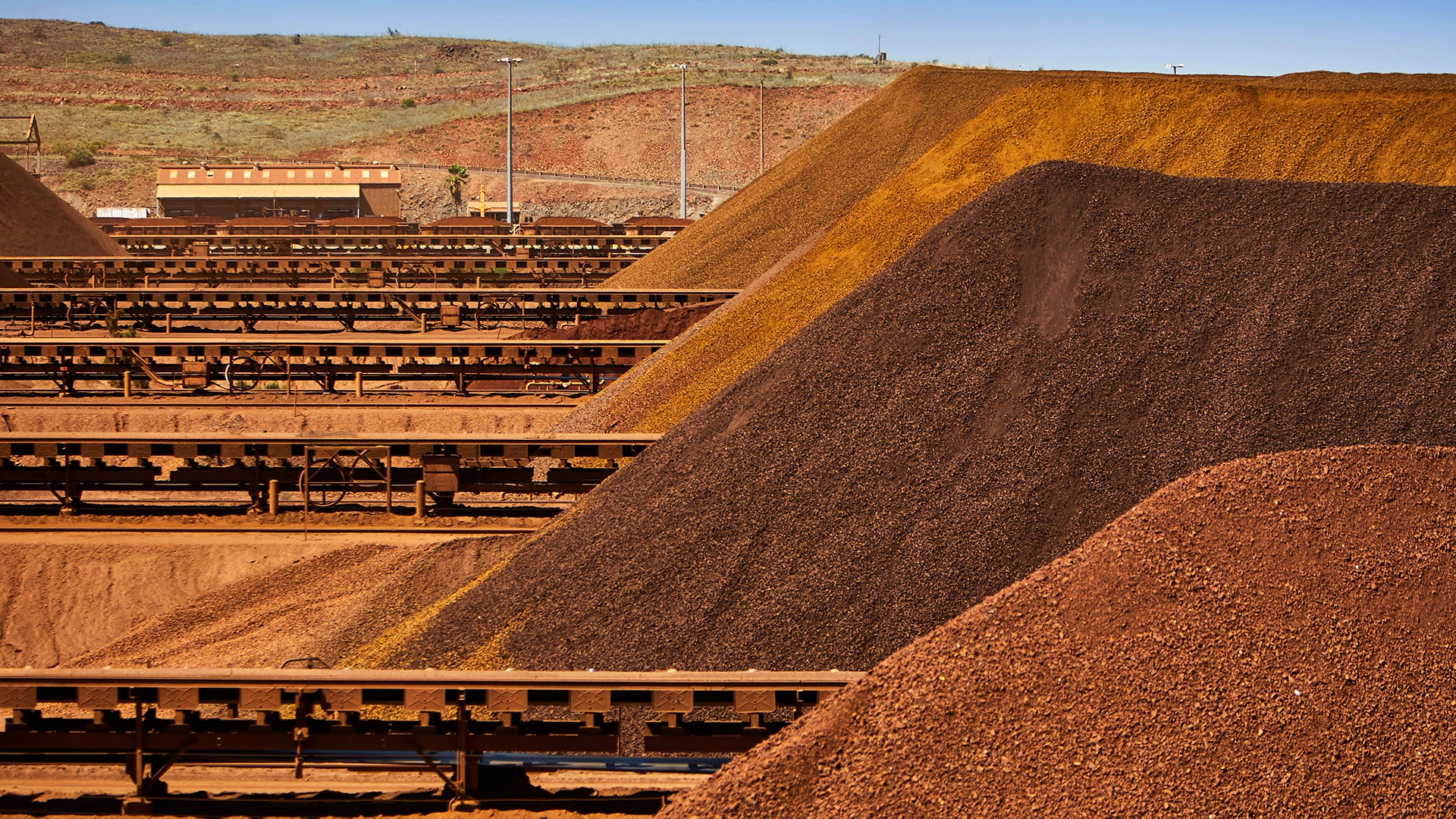
Iron ore-rich countries are limited in their production unless they have convenient access to consumers. Australia supplies raw materials through several major ports, including Port Hedland, the largest hub, through which more than 500 million tons per year pass.
Investments and extraction technologies
It is not just the availability of ore that affects production volumes, but also how it is mined. The leading countries have large companies – BHP, Rio Tinto and Vale – that are investing in automation and large-scale open pits. Rio Tinto, for example, uses autonomous AutoHaul trains to reduce ore transportation costs.
These technologies have a direct impact on the cost of production. For the largest producers in Australia, it remains one of the lowest in the world. For example, Rio Tinto’s operating costs for iron ore mining in the Pilbara region are projected to be $23.5-25 per ton in 2026. In other parts of the world, such as China, costs could exceed $50-60 per ton.
Russia among leading countries in iron ore production
Russia differs from other major producers in the way the extracted ore is used. While Australia and Brazil export a significant portion of their raw materials, Russian production is mainly oriented towards the domestic market.
According to Rosnedra, the country’s balance reserves of iron ores amount to about 118.4 billion tons. Among the largest deposits is the Kursk Magnetic Anomaly. Only in the category of explored reserves there are about 32 billion tons. The Lebedinskoye and Mikhailovskoye deposits are located here, which are developed by open-pit mining and provide raw materials for large metallurgical enterprises.
A significant portion of ore is processed domestically. Russian steel mills, such as NLMK, MMK and Severstal, produce about 70 million tons of steel per year, while iron ore exports to the world are relatively small. For example, according to Russian Railways, 3.7 million tons of ore were exported in the first quarter of 2025.
Will the iron ore market change
Until 2030, iron ore production will grow moderately in the leading countries due to the expansion of existing open-pit mines – more so, and less so, due to the emergence of new players.
In Australia, major companies are launching new areas within existing ore provinces. For example, Rio Tinto is developing the Gudai-Darri project in the Pilbara region – its capacity is 43 million tons per year. BHP, in turn, is implementing the South Flank project, which has reached its design capacity of about 80 million tons per year.
In Brazil, the main growth is due to the recovery and expansion of production after the constraints of previous years. Vale is ramping up production at the S11D deposit (Carajás), which already produces about 90 million tons of ore per year. In parallel, a major new project, Simandou in Guinea, is entering the market. Its planned capacity is estimated at about 100-120 million tons per year once it reaches full capacity.
Do you think that the emergence of new projects will really change the balance of power in the market, or will Australia and Brazil retain their leadership for a long time to come?
Cover photo taken from Rio Tinto’s official website