The debate surrounding ocean-floor mining is heating up. While some see this solution as a problem of a lack of resources for green energy, others warn of irreversible damage to fragile deep-sea ecosystems.
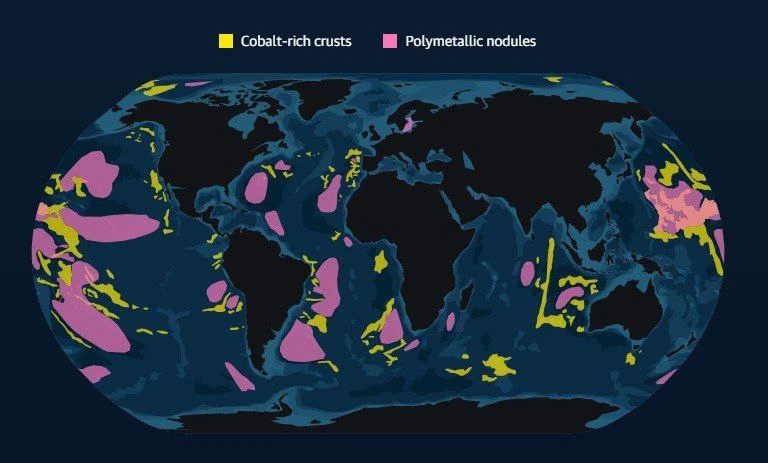
Race for valuables metals is rapidly shifting to new, almost unexplored territory – the bottom of the world’s oceans. Companies such as Canada’s The Metals Company have already announced plans to begin commercial mining by 2026. Their goal is rich deposits of nickel, cobalt, copper and manganese, lying at depths of up to 6 kilometers. These metals are critical for the production of electric vehicle batteries and renewable energy, making undersea resources extremely attractive.
However, a serious obstacle stands in the way of industrialists – the scientific community and environmentalists. Research shows that the ocean floor, particularly in the Clarion-Clipperton Prospect Area between Hawaii and Mexico, provides a unique habitat. Every year hundreds of new species previously unknown to science are discovered there. Scientists warn that mining could destroy these fragile ecosystems before we even know them. The rise of bottom sediments will create giant turbid clouds that can disrupt the life of marine organisms over vast areas.
In response to these risks, many market players are taking action. Major automakers including BMW, Volvo and Renault have publicly refused to use metals mined from the ocean floor in their products. The move demonstrates growing pressure from consumers and investors interested in ethical and sustainable supply chains.
Alternative solutions are also being developed in parallel. Technological innovation and the growth of recycling metals from old devices can significantly reduce the need for new mining. The International Seabed Authority (ISA) is currently developing a regulatory framework that must balance economic interests with environmental safety. Many countries and organizations are actively lobbying for an international moratorium until the consequences are fully assessed.
The future of deep-sea mining remains uncertain. On the one hand, there is a growing demand for metals and technological capabilities, on the other, unpredictable risks for the ocean. The choices that humanity makes will determine whether we are able to find the resources for progress without sacrificing the last untouched corners of the planet.
The material was prepared with the support of the Russian Ministry of Education and Science as part of the Decade of Science and Technology.
Source: @metalsesgtrends