The global budget for mineral exploration in 2025 was $12.4 billion. This is almost exactly the same as a year earlier – a change of just minus 0.6%. However, behind the external stability lies a radical restructuring of priorities: companies are moving away from risk and investing in what guarantees demand here and now.
The main beneficiary is gold. To his intelligence sent $6.2 billion. This is half of all funds and 11% more than in 2024. The reason is simple: precious metal prices are setting new records, and geopolitical turbulence and inflation expectations are making gold the main defensive asset. Mining companies are rushing to build up reserves while the market is favorable.
In second place, just like a year ago, is copper. She got 3.3 billion – 26% of the budget. The metal is needed for the energy transition: electric vehicles, grids, and renewable generation require copper in huge quantities. There is no doubt about long-term demand here, so even in difficult times companies do not cut back on investments.
But metals for batteries – lithium and nickel – were dropped from the agenda. Their exploration was funded by only $595 and $332 million, respectively. This is 5 and 3% of the total budget. An oversupply, a collapse in prices and the closure of access to cheap money for small projects took their toll. Investors are no longer willing to take risks in a segment that was recently considered the most promising.
The remaining areas – silver, uranium, platinum group metals, as well as rare and rare-earth metals – accounted for a total of just over a billion dollars.
But it’s not just the choice of metals that shows the change in sentiment. The geography of the application of forces has also changed. 45% of all investments aimed at geological exploration near existing mines. Another 21% goes to studying areas that have been under development for a long time. And only 21% of the budget was spent on searching for completely new deposits. This means that companies are not currently striving to discover something fundamentally new. They choose the cheaper and faster way – to increase reserves where there is already infrastructure, clear geology and working licenses.
This approach reduces the risks, but creates a problem for the future. If geologists do not look for new promising areas for several years, then after a decade there may be a shortage of large deposits. In the meantime, the market is voting for safety: less ambition, more pragmatism.
Source: @metalsesgtrends
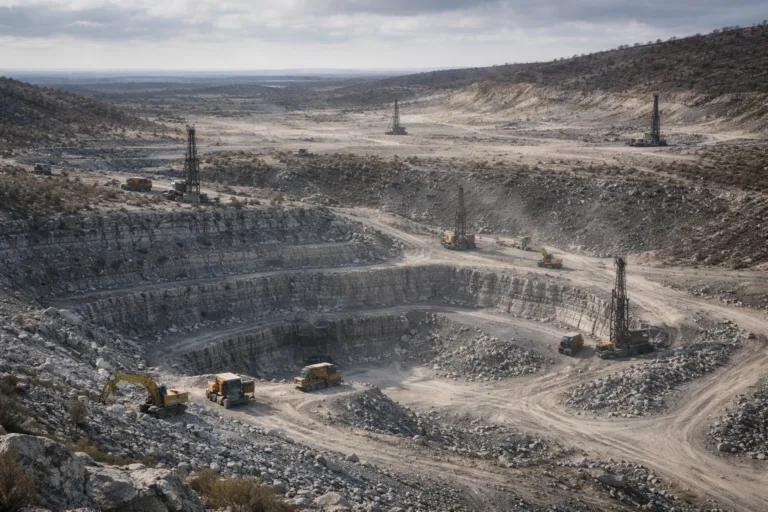
Image generated by a neural network