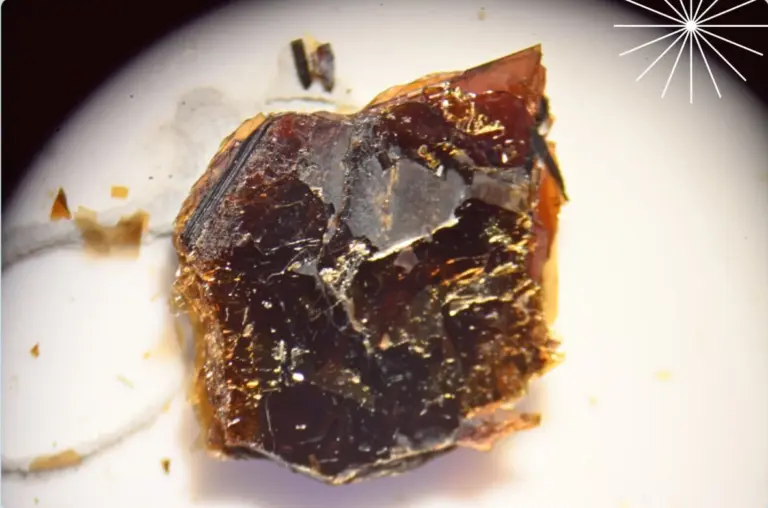
Employees of the Institute of Volcanology and Seismology, Far Eastern Branch of the Russian Academy of Sciences, conducted a unique study, studying how the minerals kupletskite and cesium kupletskite behave at high temperatures. The results of the work open up new opportunities for creating materials capable of safely disposing of radioactive cesium.
Scientists heated mineral samples to 1000 °C, recording changes in their structure using X-ray diffractometry. It turned out that at a temperature of about 500 °C the crystals first expand and then sharply contract. This process involves oxidation of manganese and loss of water, making the minerals more stable.
The data obtained can be used to develop ceramic materials intended for the disposal of radioactive cesium. Such technologies are especially in demand in the chemical industry, oil production and the production of radiation detectors.
In addition, the study will help geologists more precisely determine history of rocks. The presence of minerals with oxidized manganese indicates their heating to high temperatures in an oxygen environment.
Project leader Elena Zhitova noted that scientists plan to further study the atomic mechanisms that occur when titanosilicate minerals are heated. This will make it possible to create even more effective materials for solving environmental and industrial problems.
The research was supported by a grant from the Russian Science Foundation. The work of scientists makes a significant contribution to the development of safe technologies of the future.
The material was prepared with the support of the Russian Ministry of Education and Science as part of the Decade of Science and Technology.
Source: @rasofficial