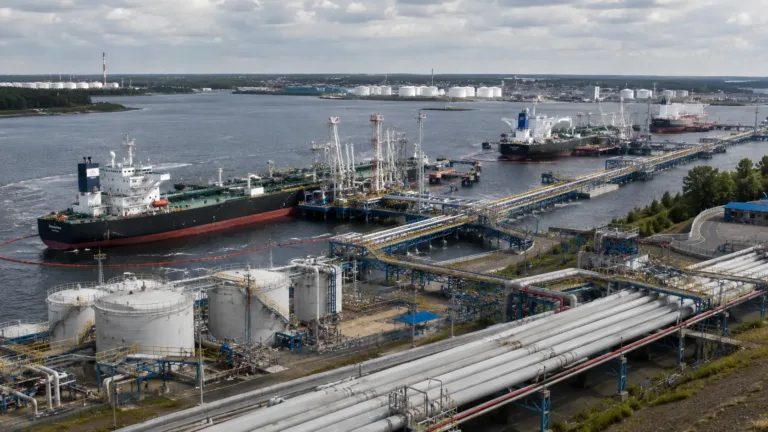
Kazakhstan’s crude oil export flows have undergone a significant realignment. In May, shipments through the Baltic port of Ust-Luga surged by nearly one-third, while exports via the Caspian Pipeline Consortium (CPC) terminal near Novorossiysk declined sharply. The shift was driven by terminal maintenance, adverse weather conditions, and scheduled shutdowns at key oil fields.
According to KazTransOil, 301,000 tonnes of crude oil were shipped through Ust-Luga in May, representing a 30.9% increase compared with the previous month. At the same time, volumes transported through the CPC system fell by 20.5% to 395,000 tonnes.
The decline in CPC shipments was caused by several factors. The consortium’s marine terminal near Novorossiysk continues repair work related to the replacement of a single-point mooring system, limiting its operating capacity. In early May, the terminal also lost more than 680 operating hours due to severe storm conditions.
Production disruptions at Kazakhstan’s largest oil fields further reduced export volumes. The CPC system is primarily supplied by the country’s “big three” projects in western Kazakhstan—Karachaganak, Kashagan, and Tengiz. During the first half of the year, both Kashagan and Tengiz underwent temporary operational shutdowns and scheduled maintenance, reducing the amount of crude available for export.
The shift involves not only export routes but also crude grades. The Novorossiysk route traditionally handles CPC Blend, a light crude favored by refiners in Southern Europe and the Mediterranean region. Ust-Luga, meanwhile, receives heavier and more sulfur-rich KEBCO crude produced at onshore fields in the Aktobe, Atyrau, and Mangystau regions. This grade is particularly suitable for deep-conversion refineries in Europe and Asia.
The destination markets for KEBCO are also changing. Historically, much of this crude was shipped to Western and Northwestern Europe. However, increasingly complex logistics in the Atlantic basin have encouraged traders to redirect cargoes toward China and India. As a result, substantial volumes no longer reach European refiners.
In 2025, the largest importers of Kazakh oil were Italy with 28.9 million tonnes, followed by the Netherlands with 10.6 million tonnes and France with 5.6 million tonnes. Romania ranked fourth and Greece fifth. China imported 3.8 million tonnes, but analysts expect that figure to grow in the coming years.
Kazakhstan continues to adapt its export strategy in response to port availability and changing market conditions. The gradual redirection of volumes from Novorossiysk to Ust-Luga—and increasingly toward Asian markets—appears to be developing into a long-term trend.
Source: CDU TEK
Image: AI-generated