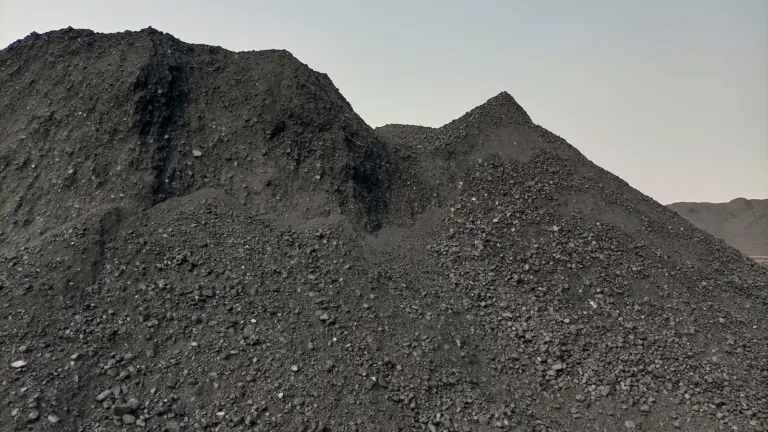
Процесс переработки угольной золы в коагулянт для очистки воды.

New life for ash: how waste from coal power plants purifies water

06.12.2025
Reading time: 2 min
0

Scientists have turned harmful coal ash into an effective water purification reagent. The breakthrough technology solves two problems: the disposal of hazardous waste and the production of a useful coagulant.

Researchers from Russia and China have developed an innovative method for processing fly ash from coal-fired power plants. Now this waste becomes the basis for the production of polyoxychloride aluminum – a powerful coagulant used in water treatment plants. The method provides double benefits by reducing environmental damage and creating a useful product.

A coagulant is a substance that purifies water by causing tiny contaminant particles to stick together into large flakes. These flakes are then easily removed. The technology is based on the leaching process: with the help of hydrochloric acid, valuable elements – aluminum and iron – are extracted from the ash. After optimizing the process conditions, the scientists achieved recovery of 70% of the aluminum contained in the waste.

The resulting solution is then converted into a liquid coagulant. The key advantage of the new aluminum polyoxychloride was not only the high content of the active component, but also the safe level of heavy metals. In tests, the reagent proved its effectiveness, reducing water turbidity by almost 96%, which corresponds to the best commercial analogues.

It is important that the technology is virtually waste-free. The solid residue after processing, consisting mainly of silicon dioxide, can be used in the construction industry. Thus, the ash becomes fully valuable.

This development opens the way to large-scale and economical disposal of ash accumulated in huge quantities. The introduction of technology will not only purify water, but also significantly reduce the harmful impact of coal energy on the environment, closing the production cycle.

The material was prepared with the support of the Russian Ministry of Education and Science as part of the Decade of Science and Technology.

Source: @cdutek

Photo: Shutterstock

Prepared by —
Author avatar
Lyubov Cherkasova
Did you like this news? Share with friends
RELATED

Leave your comment


Editor-in-Chief
Maria Kostina
Maria Kostina
Geophysicist, founder of the project and editor-in-chief GeoConversation. Salt of the Earth
GO TO THE EDITOR'S COLUMN

GeoConversation. Salt of the Earth is a media platform where top mining-industry specialists share their experience, helping professionals communicate and collaborate more effectively.

Learn more about the project
TOP PROFESSIONALS
Глеб Загорский

Gleb Zagorsky

State Scientific Center of the Russian Federation, Arctic and Antarctic Research Institute
Geophysics Engineer
Олег Набелкин — эксперт по рентгеноспектральному анализу minералов и руд

Oleg Nabelkin

IMGRE, Moscow
Head of Department
Тарас Паникоровский — эксперт в minералогии и кристаллографии, лауреат премии «Хрустальный компас». Исследует природоподобные технологии и техносферную безопасность Арктики.

Taras Panikorovsky

Murmansk Arctic University, Murmansk
Head of Laboratory
VIEW ALL EXPERTS
CATEGORIES
SUBSCRIBE
If you would like to receive a monthly selection of fresh articles by email
LIKE THE PROJECT? SUPPORT US
Friends, developing the project takes a lot of effort and financial resources. If you like what we do, you can support us in two ways.
MORAL SUPPORT
Show our website to your friends. Just click on the social media icons below and share our website on your pages.
FINANCIAL SUPPORT
Even a small fee will help us pay for the transcription (audio to text) of an expert interview or the design of drawings, diagrams, and tables.
Send a donation
Got an article idea? Suggest it.
Cool! You have an idea for us. We love that, because only the experience and knowledge of an expert makes our articles useful for the reader. Please answer 5 questions to let us know a little more about you and the article
answer questions