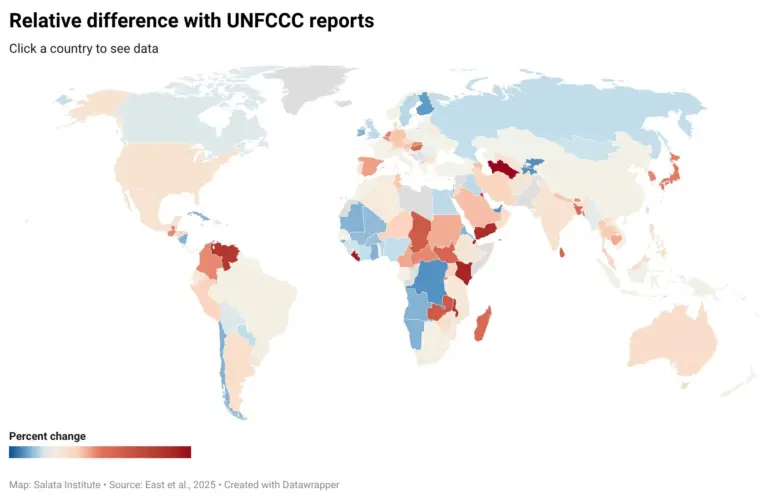
Harvard scientists have unveiled an open system that allows anyone to compare countries’ official data on methane emissions with satellite measurements and find discrepancies.
For many years, states reported to the UN on methane emissions based on calculations: they took into account the number of livestock, volumes oil and gas production, amount of waste and averaged coefficients were used. However, measurements from aircraft and satellites show that such estimates often do not coincide with the real picture.
A team at Harvard University has developed Integrated Methane Inversion (IMI), an open and free tool that allows governments, scientists and public organizations to independently verify national data. The platform compares official reports with atmospheric methane concentrations recorded by satellites.
The first global analysis for 2023 covered 161 countries. In about a quarter of them, actual emissions were more than 50% higher than official data. Thus, in the oil and gas sector of Venezuela, estimates exceeded the reported ones by almost five times, in Turkmenistan – almost four times. In the USA, the figure was approximately one and a half times higher.
The researchers also calculated “methane intensity,” the fraction gas, lost during extraction. In Venezuela it reached almost 29%, while in the US it is about 2% and in Qatar about 0.1%. This shows that modern technology and controls can dramatically reduce leakage.
Methane is considered one of the most dangerous greenhouse gases: in the first decades it traps heat much more strongly than carbon dioxide and, according to scientists, is responsible for about a third of global warming since the industrial era. He stands out when extracting fuel, in agriculture and landfills.
IMI works from the top down: the system begins its analysis with what is actually recorded in the atmosphere and calculates which sources could create such a picture. It combines data from multiple satellites and revises estimates by economic sector.
The authors emphasize that the main value of IMI is continuous monitoring. The tool regularly identifies outdated or underestimated data, corrects climate reports, and monitors whether countries are meeting their emissions reduction promises. Even if a state withdraws from international agreements, the system can continue independent monitoring based on open data.
Source: Phys.org
Photo: Salata Institute