ZabSU researchers are developing a technology to recover rare metals from industrial waste and new reagents for ore processing.

Researchers at ZabSU seek ways to recover rare metals from waste

27.11.2026
Reading time: 2 min
0

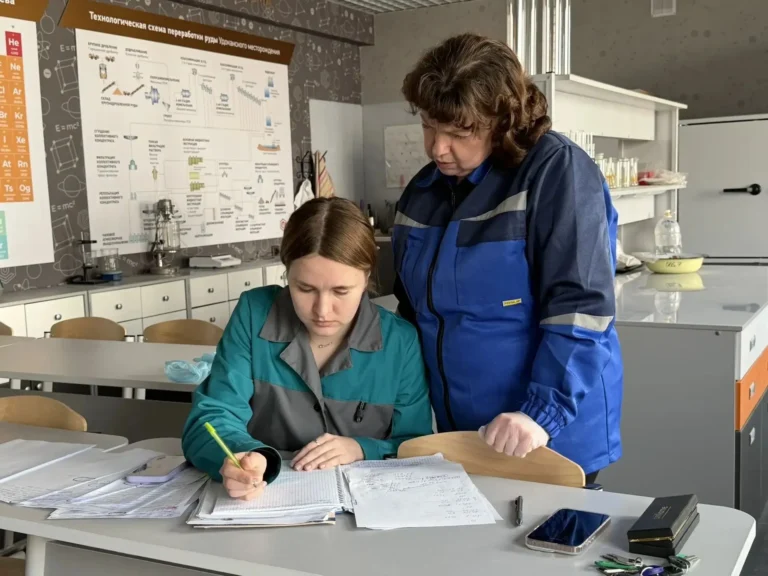
Researchers at Transbaikal State University (ZabSU) have begun developing a technology to recover rare metals from mining and industrial waste, as well as new reagents for ore processing. The work is part of the “Metals of the Future” project. According to the university, waste from ore processing and coal combustion can contain valuable elements and serve as an additional source of raw materials.

In the first stage, the researchers identified sites in Transbaikal Territory with potential for rare metal exploration, including germanium and lithium. During fieldwork, they collected samples from the tailings at the Sherlovogorskoye deposit. The samples are now being tested for germanium, lithium, beryllium and niobium. In parallel, the team is studying coal ash and slag from the Kharanor and Tarbagatai deposits, focusing primarily on germanium.

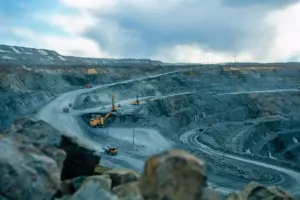
Another area of research is the complex ores of the Udokan deposit. The team is selecting reagents that could improve processing efficiency. After examining the ore’s composition and processing characteristics, the researchers conducted tests using Flotent reagents. They assessed how suitable the ore was for flotation, a method that separates valuable minerals from waste rock. The researchers see combined collector reagents as a promising option for complex ores.

The next steps are to develop a processing flowsheet and conduct pilot-scale trials of new domestically produced reagents on representative samples. The project also plans to establish a research and production consortium to manufacture and test the reagents, and to extend the work to other types of complex ores, including rare earth deposits in the Russian Far East.

The project addresses two goals at once: bringing industrial waste back into use and reducing reliance on imported reagents. If the technology proves effective on representative samples, Transbaikal Territory could gain a new source of rare metals and build its own expertise in mineral processing chemistry.

Source Transbaikal State University

Image credit Ministry for the Development of the Russian Far East and the Arctic

Prepared by —
Author avatar
Yulia Frolova
Did you like this news? Share with friends
RELATED

Leave your comment


Editor-in-Chief
Maria Kostina
Maria Kostina
Geophysicist, founder of the project and editor-in-chief GeoConversation. Salt of the Earth
GO TO THE EDITOR'S COLUMN

GeoConversation. Salt of the Earth is a media platform where top mining-industry specialists share their experience, helping professionals communicate and collaborate more effectively.

Learn more about the project
TOP PROFESSIONALS
Алексей Дубинин — эксперт по WordPress с 10-летним опытом. Создает продающие сайты с высокой конверсией и интеграцией CRM

Alexey Dubinin

Turnkey Websites
Website Developer
Исхак Фархутдинов

Iskhak Farhutdinov

V.I. Vernadsky State Geological Museum of the Russian Academy of Sciences
Academic Secretary
Тарас Паникоровский — эксперт в minералогии и кристаллографии, лауреат премии «Хрустальный компас». Исследует природоподобные технологии и техносферную безопасность Арктики.

Taras Panikorovsky

Murmansk Arctic University, Murmansk
Head of Laboratory
VIEW ALL EXPERTS
CATEGORIES
SUBSCRIBE
If you would like to receive a monthly selection of fresh articles by email
LIKE THE PROJECT? SUPPORT US
Friends, developing the project takes a lot of effort and financial resources. If you like what we do, you can support us in two ways.
MORAL SUPPORT
Show our website to your friends. Just click on the social media icons below and share our website on your pages.
FINANCIAL SUPPORT
Even a small fee will help us pay for the transcription (audio to text) of an expert interview or the design of drawings, diagrams, and tables.
Send a donation
Got an article idea? Suggest it.
Cool! You have an idea for us. We love that, because only the experience and knowledge of an expert makes our articles useful for the reader. Please answer 5 questions to let us know a little more about you and the article
answer questions