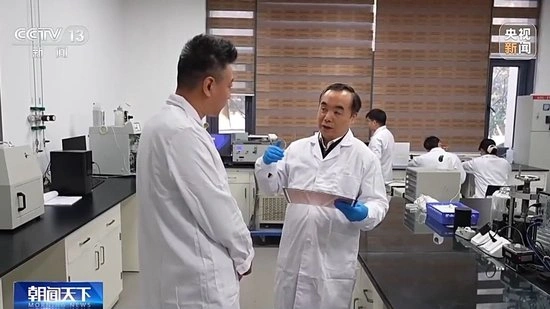
Chinese scientists have developed flexible solar cells with record performance. This technology will ensure reliable power supply to spacecraft and stations on long-term missions.
A group of researchers led by Professor Zhang Xiaohuang has made a breakthrough in the field of solar energy. They managed to create flexible solar panels that combine two types of materials – silicon and perovskite. The results of the work were published in the authoritative scientific journal Nature.
The new technology solves a key problem in modern solar panels – combining high efficiency with flexibility and durability. Each layer in such a battery captures a different spectrum of sunlight, which significantly increases the total amount of energy generated compared to conventional cells.
The development is of particular importance for the space industry. In space conditions There is no way to connect to fixed networks, so a reliable autonomous energy source is critical. Flexible and efficient new types of solar panels will be able to provide electricity for satellites, orbital stations and research equipment for years.
Scientists note that their work lays the scientific and technical basis for the mass introduction of flexible photopanels. In addition to space, such elements can be used in ground technology, portable electronics and even in construction.
The development of flexible dual-action solar cells opens up new opportunities for space exploration and the development of renewable energy on Earth. The technology promises to make space missions longer and more reliable.
Source: CCTV
Image: CCTV