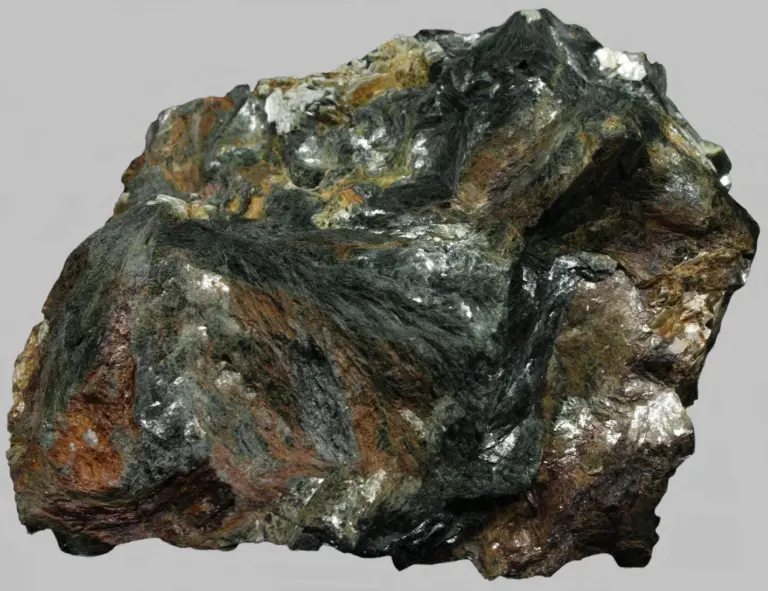
Geologists discovered a previously unknown variety of chloritoid, a mineral that helps determine the conditions for the formation of rocks. This mineral, called chloritoid-3T, has a unique crystalline structure and can become an accurate “geothermometer.”
A group of scientists from St. Petersburg State University, the Institute of Volcanology and Seismology, Far Eastern Branch of the Russian Academy of Sciences, and the Kola Science Center of the Russian Academy of Sciences studied chloritoid samples from the Urals. Using X-ray diffraction analysis, they identified a new type of crystal structure – chloritoid-3T.
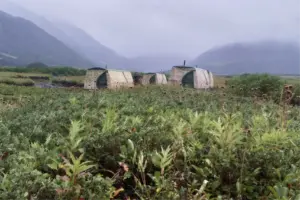
This mineral differs from previously known varieties in its more ordered structure and high symmetry. Interestingly, it was found on the same field, where chloritoid was first discovered almost 200 years ago.
Chloritoids play a key role in geology:
- Allows you to determine the temperature (300-550°C) and pressure (2-10 atmospheres) of rock formation
- Indicate the depth of occurrence (up to 30 km)
- Help in intelligence minerals
The new 3T polytype will make these measurements more accurate. As Professor Andrey Zolotarev from St. Petersburg State University noted, the mineral is probably widespread, but previously went unnoticed due to diagnostic difficulties.
The research, supported by the Russian Science Foundation and published in American Mineralogist, opens up new possibilities for geologists. Further study of chloritoid-3T will allow:
- Clarify the stability conditions for this polytype
- Improve geological exploration methods
- Better understand the formation processes of the earth’s crust
This discovery confirms that even well-studied minerals can hold unexpected secrets that are important for science and industry.
The material was prepared with the support of the Russian Ministry of Education and Science as part of the Decade of Science and Technology
Source: naked-science.ru