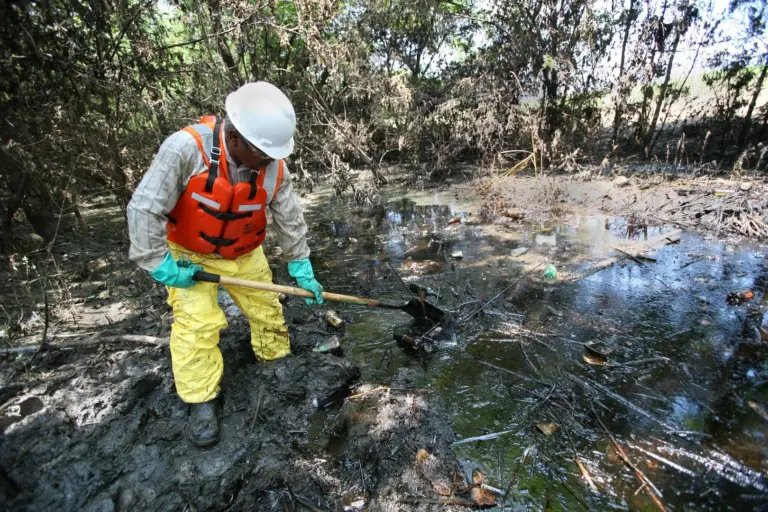
An international team of researchers has unveiled an innovative method that can accurately determine how long ago an oil spill occurred. This approach opens up new opportunities for combating the consequences of pollution and making the right decisions to restore the environment.
Experts from Belfast and Nigeria have developed a unique technology to assess the dynamics of oil pollution. It is based on an in-depth analysis of microbial communities in the soil. Unlike traditional chemical methods that only record the volume of a spill, the new practice helps track the history of contamination and its development over time.
The essence of the method is to study the relationship between two types of bacteria: aerobic and anaerobic. If aerobic microorganisms predominate in the sample, this indicates recent contamination. The dominance of anaerobic bacteria, on the contrary, indicates that the spill occurred quite a long time ago.
To confirm the effectiveness of the technology, scientists analyzed 90 soil samples with different histories of contamination. The results revealed clear markers. Fresh contamination is indicated by a high level of kerosene, a predominance of aerobic bacteria and a specific gene ratio. Old pollution is characterized by low levels of kerosene, dominance of anaerobic bacteria and a different balance of genetic indicators.
This development will become a valuable tool for ecologists and specialized services. The method is especially useful in situations where it is difficult to determine the source and exact time of an oil leak. Its use will optimize the cleaning process and make environmental monitoring much more effective. The technology has already shown its effectiveness in the Niger Delta and can be adapted to work in other regions with different climatic conditions and types of petroleum products.
The material was prepared with the support of the Russian Ministry of Education and Science as part of the Decade of Science and Technology.
Source: @cdutek
Photo: rossaprimavera.ru