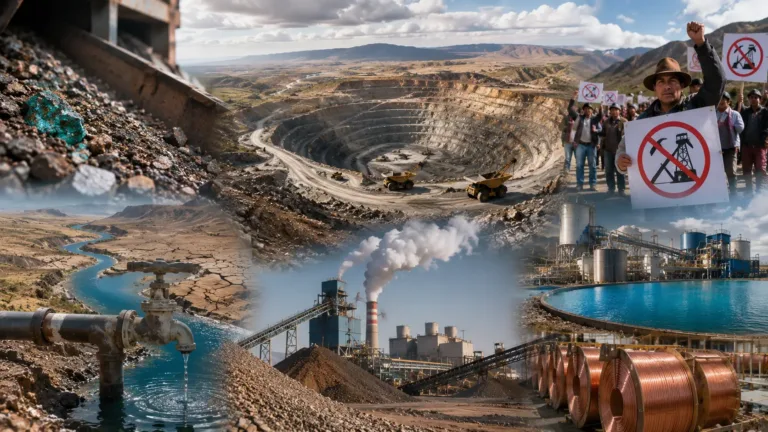
The global copper concentrate market is facing a supply deficit amid strong demand. However, analysts from the International Copper Study Group (ICSG) have identified several systemic barriers that continue to limit supply growth and delay the launch of new mining projects.
The first issue is declining ore grades. This problem is especially severe in mature mining regions such as the United States and Chile. Ore quality is deteriorating, meaning significantly larger volumes of rock must be processed to produce the same amount of copper.
The second barrier is financing. Construction of copper mines almost always depends on project financing, but prolonged economic uncertainty and commodity price volatility have sharply increased the cost of capital. Investors are demanding higher risk premiums for new projects.
The third factor is limited access to water. Most major copper deposits are located in arid regions where water availability is already constrained. Without sufficient water supplies, both ore extraction and mineral processing become impossible, making water access a critical limitation for the industry.
The fourth challenge involves massive energy consumption and growing “green” transition risks. Coal remains the primary energy source for many copper mining operations. However, the global push toward decarbonization and reduced coal use could significantly increase operating costs if companies are forced to switch to more expensive energy sources.
The fifth issue is conflict with local communities. This problem is particularly acute in Peru and the Philippines, where indigenous groups and local residents regularly oppose mining projects, at times escalating into direct confrontations. Such conflicts often lead to delays or complete project shutdowns.
The sixth barrier concerns the sulfuric acid market. For projects using SX-EW technology — solvent extraction and electrowinning following leaching — the cost and availability of sulfuric acid can account for up to 16% of operating expenses. Any fluctuation in acid prices directly affects project profitability.
Despite strong global demand, copper production growth remains constrained by a combination of geological, financial, environmental, and social challenges. Each of these barriers requires separate solutions, and without overcoming them, the global copper market is likely to remain undersupplied.
Source: ICSG