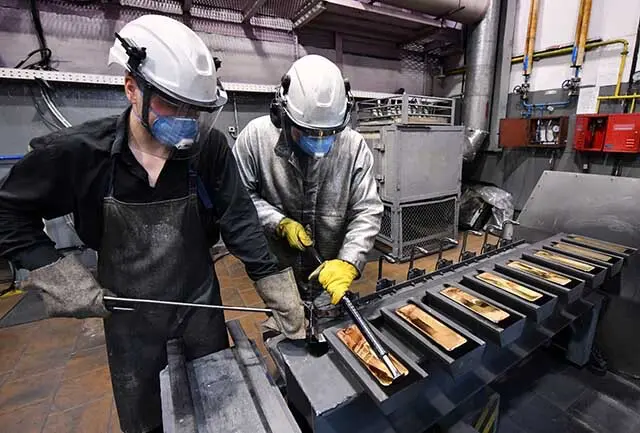
The State Duma has approved a law that significantly changes the rules governing the circulation of gold, silver, and platinum in Russia. Beginning September 1, 2027, all refining plants will be required to connect to the unified state information system known as GIIS DMDK. Without confirmation of the legal origin of a batch, refineries will be prohibited from accepting raw materials for processing. If information is missing or raises suspicions, the enterprise must refuse the supplier.
Previously, the refining sector operated with limited transparency: plants could accept metals from both licensed producers and illegal miners without having effective verification tools. The new law introduces end-to-end digital tracking for every batch of precious metals. Kaplan Panesh, Deputy Chairman of the State Duma Committee on Budget and Taxes, described the system as a “transparent digital platform” that will put an end to the industry’s “wild west” practices.
In addition to mandatory verification of refining feedstock, the law introduces several new control measures. Starting September 1, 2026, Russia’s Federal Assay Chamber will gain the authority to collect samples of precious stones during import and export procedures, strengthening customs oversight. At the same time, private individuals will be allowed to freely conduct transactions involving investment-grade precious metal coins, whereas such operations were previously heavily restricted.
Logistics rules will also be simplified. Transportation of raw materials and waste containing low concentrations of precious metals — less than 5% silver and less than 1% gold, platinum, and platinum group metals — will in some cases be permitted without armed security or specialized transport equipment. The main requirement will be ensuring cargo safety. This change is expected to simplify transportation of low-grade ore concentrates and industrial waste materials that previously required disproportionately expensive security measures.
The primary objective of the law is to bring the precious metals trade out of the shadows. Legitimate mining and processing companies are expected to receive fairer market conditions, while illegal operators will lose access to sales channels. Refining plants will need to overhaul their internal intake procedures, and suppliers will have to verify transaction legitimacy through the GIIS DMDK system.
The Russian government is placing strong emphasis on full digitalization and transparency of precious metals circulation. Authorities believe the reform will reduce the risks associated with illegal mining activities and increase confidence in Russian refining products both domestically and internationally.
Source: @CarierNews
Image: nytimes.com