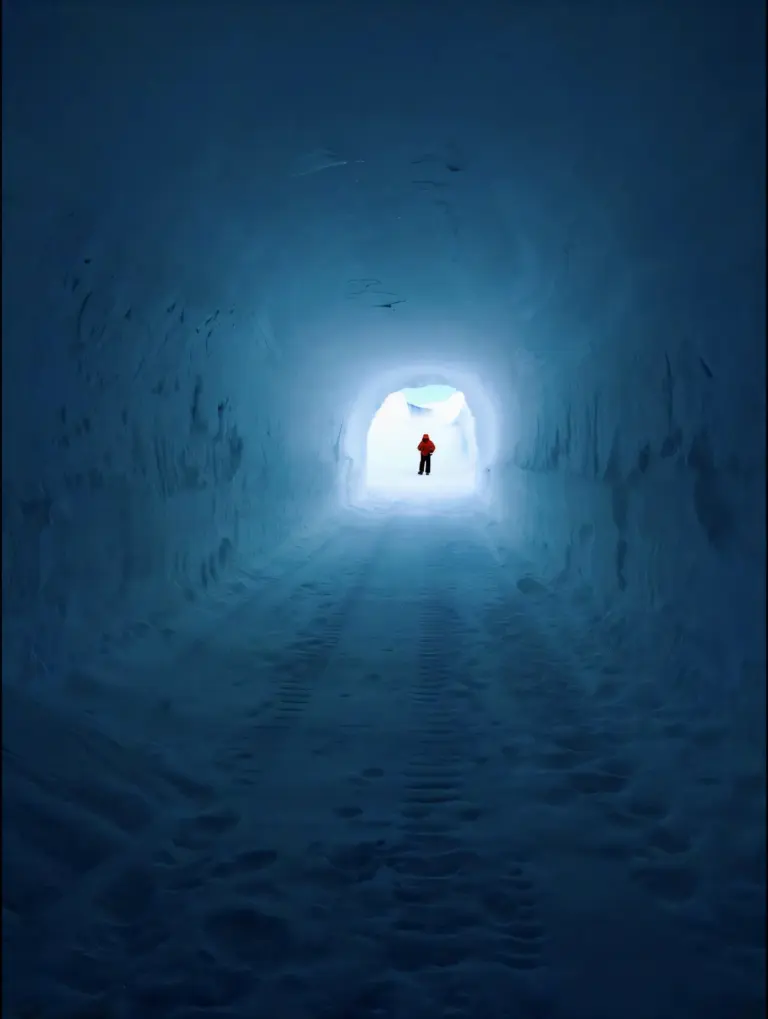
Антарктическое хранилище Ice Memory для сохранения ледяных кернов и климатических архивов.

The first ice core storage facility for future generations has been opened in Antarctica.

16.01.2026
Reading time: 2 min
0

The world’s first ice core storage facility, the Ice Memory Sanctuary, has officially opened on the Antarctic plateau. Two ice samples extracted from the Alpine glaciers of Mont Blanc and Grand Combin were delivered there. These cores are considered valuable climate archives because they contain information about atmospheric composition, precipitation and past pollution.

The sample journey took more than 50 days. They were transported by a scientific vessel from Europe, and then transported by a special flight to the Franco-Italian Concordia station. The temperature was maintained at minus 20 degrees along the entire route in order to preserve ice structure and the gases it contains.

The storage facility is an ice cave carved out of thick snow and ice. It is located at a depth of about nine meters, does not use refrigeration equipment and maintains a stable temperature of about minus 52 degrees thanks to natural conditions. This allows samples to be preserved without the risk of melting or contamination.

The Ice Memory project has been implemented by an international consortium of scientists since 2015. Its goal is to collect and preserve ice cores from glaciers that are rapidly disappearing due to climate change. Since 2000, the world has already lost about 5% of the volume of mountain glaciers, and in some regions – up to 39%.

According to the researchers, the preserved cores will become a “time capsule” for science. Even if many glaciers disappear, future generations will be able to study ancient ice using new technologies and obtain the data needed to understand climate processes and make decisions.

The creation of an ice storage facility in Antarctica was an important step in preserving the planet’s climate legacy. Scientists hope that the archive will help better understand the Earth’s past and more accurately assess climate risks in the future.

Source: Phys.org

Photo: R. Ascione ENEA PRNA IPEV

Prepared by —
Author avatar
Yulia Frolova
Did you like this news? Share with friends
RELATED

Leave your comment


Editor-in-Chief
Maria Kostina
Maria Kostina
Geophysicist, founder of the project and editor-in-chief GeoConversation. Salt of the Earth
GO TO THE EDITOR'S COLUMN

GeoConversation. Salt of the Earth is a media platform where top mining-industry specialists share their experience, helping professionals communicate and collaborate more effectively.

Learn more about the project
TOP PROFESSIONALS
Олег Набелкин — эксперт по рентгеноспектральному анализу minералов и руд

Oleg Nabelkin

IMGRE, Moscow
Head of Department
Тарас Паникоровский — эксперт в minералогии и кристаллографии, лауреат премии «Хрустальный компас». Исследует природоподобные технологии и техносферную безопасность Арктики.

Taras Panikorovsky

Murmansk Arctic University, Murmansk
Head of Laboratory
Maria Kostina — эксперт в рудной геофизике, организация и аудит геофизических исследований, подбор подрядчиков и оборудования.

Maria Kostina

Canadian geophysical company
Geophysics Expert
VIEW ALL EXPERTS
CATEGORIES
SUBSCRIBE
If you would like to receive a monthly selection of fresh articles by email
LIKE THE PROJECT? SUPPORT US
Friends, developing the project takes a lot of effort and financial resources. If you like what we do, you can support us in two ways.
MORAL SUPPORT
Show our website to your friends. Just click on the social media icons below and share our website on your pages.
FINANCIAL SUPPORT
Even a small fee will help us pay for the transcription (audio to text) of an expert interview or the design of drawings, diagrams, and tables.
Send a donation
Got an article idea? Suggest it.
Cool! You have an idea for us. We love that, because only the experience and knowledge of an expert makes our articles useful for the reader. Please answer 5 questions to let us know a little more about you and the article
answer questions