Women make up only 5–10% of those employed in the global mining industry, and their share in large African mining projects remains limited. At the same time, in leadership positions at publicly listed African mining companies, women hold about 32% of senior roles and 26.5% of board seats. These figures come from a 2023 analysis by S&P Global Market Intelligence.
Africa holds at least 30% of the world’s mineral reserves, 8% of its natural gas reserves, and 12% of its oil. Despite the importance of these resources to the continent’s economies, extractive industries have historically remained male-dominated. Women were more often concentrated in administrative roles, while technical and physically demanding jobs were assigned to men.
According to a 2021 McKinsey estimate, women made up 8% to 17% of workers in the global formal mining sector. In South Africa, their share reached 16–19%. In Burkina Faso in 2024, women held 1,036 of 10,158 jobs at 12 mining companies, or 10.2%. Meanwhile, in small-scale and artisanal mining, women account for up to half of those employed, and conditions there involve serious risks: collapses, a lack of protective equipment, and exposure to toxic substances, including mercury.
In energy, the gap is just as wide: women hold only 20% of jobs and 18% of leadership positions worldwide, according to the International Energy Agency.
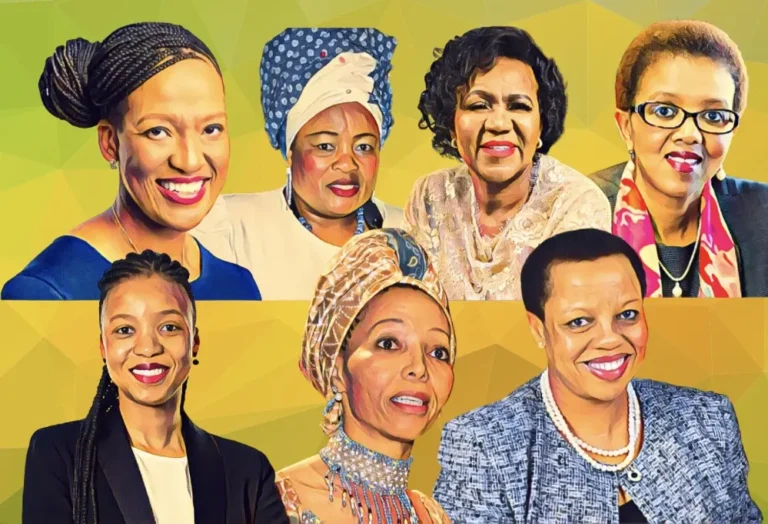
Still, shifts are visible. In 2022, Mpumi Zikalala took the helm of Kumba Iron Ore, becoming the first woman to lead a major iron ore producer in South Africa. Elohor Aibogun became the first woman to head Shell Nigeria Exploration and Production Company. However, Laetitia Gadegbeku-Ouattara, country director of Endeavour Mining in Côte d’Ivoire, cautions against overstating progress: the trend has not yet turned, although there are improvements.
Among the causes she names are low awareness of career opportunities, persistent stereotypes, and working conditions: mines are often far from cities and require long absences from home, which makes work-life balance difficult. Companies can soften this through policy; for example, Endeavour Mining provides nine months of paid maternity leave.
In Côte d’Ivoire, women make up only about 9.8% of those employed in mining. Networks such as Women in Mining are working to increase participation through career guidance, technical training, and mentoring. Expanding access to education remains key: women earn just over 35% of STEM degrees. In South Africa, the share of women graduating in mining and mineral engineering has reached 40%, in metallurgy 42%, and in earth sciences 54%.
African mining is gradually becoming more inclusive, but the gap remains large. Without access to technical education, better working conditions, and efforts to combat stereotypes, individual success stories will remain exceptions rather than the norm.
Source: Agence Ecofin
Image: African Miner