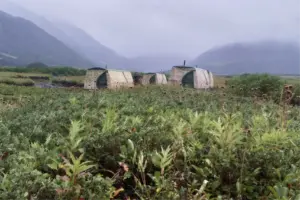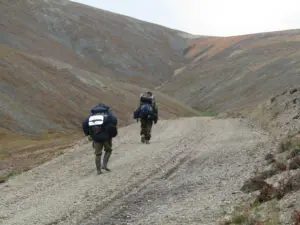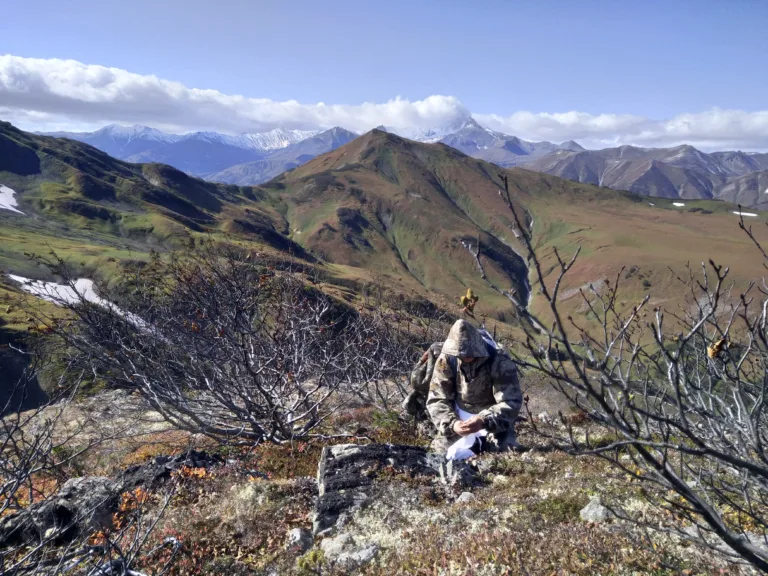
The textbooks clearly state: to become a geologist, you need to know mineralogy, petrography, the basics of searching for mineral deposits, be able to read maps and work in GIS. That’s it. But what knowledge does a geologist actually need, we asked five practitioners: geochemists, geophysicists, geomechanics, and a “popularizer of the geoprofession.” It turned out to be five tips – and not a single one about textbooks.
Why is this important now?
According to the forecast of the Ministry of Labor, by 2030 the mining industry will be missed tens of thousands of specialists, and geologists with the necessary knowledge are very in demand. The profession opens up a lot of prospects, but getting into it through short professional retraining courses is difficult: too much can be learned only with your hands.
Tip 1. Field experience is the basis without which a geologist’s knowledge is nothing
First, what a geologist needs to know – no textbook or program can replace field experience. Everyone who works on the routes speaks about this unanimously.
Ildar Kalko, geochemist and senior researcher at Moscow State University, has been going on expeditions since 2006 – he has a dozen field seasons and experience leading teams. He speaks directly: practice gives a geologist the necessary skills. It always seems to a beginner that he is working on his own, but behind this “himself” there is almost always an experienced leader who insures and advises. Therefore, the first field should be played next to professionals who have a lot to learn from.
Field experience is needed not only for those who will spend their entire lives backpacking through mountainous terrain. Geophysicist and teacher at Tomsk Polytechnic University Alexandra Volkova explains this using an example from seismic exploration. On a cross-section, a geological body is just a few reflected signals. Until you see a living exposure with your eyes, it’s not clear in your head what these signals mean. Therefore, even an “armchair” geologist cannot get by with geographic knowledge alone; it is important to get to real objects.
How to get your first field experience – in the material “Where to study to become a geologist”
Tip 2. Develop observation skills – the devil is in the details
The second skill of a geologist grows from the first. The field gives observation – the ability to notice what the untrained eye would miss.
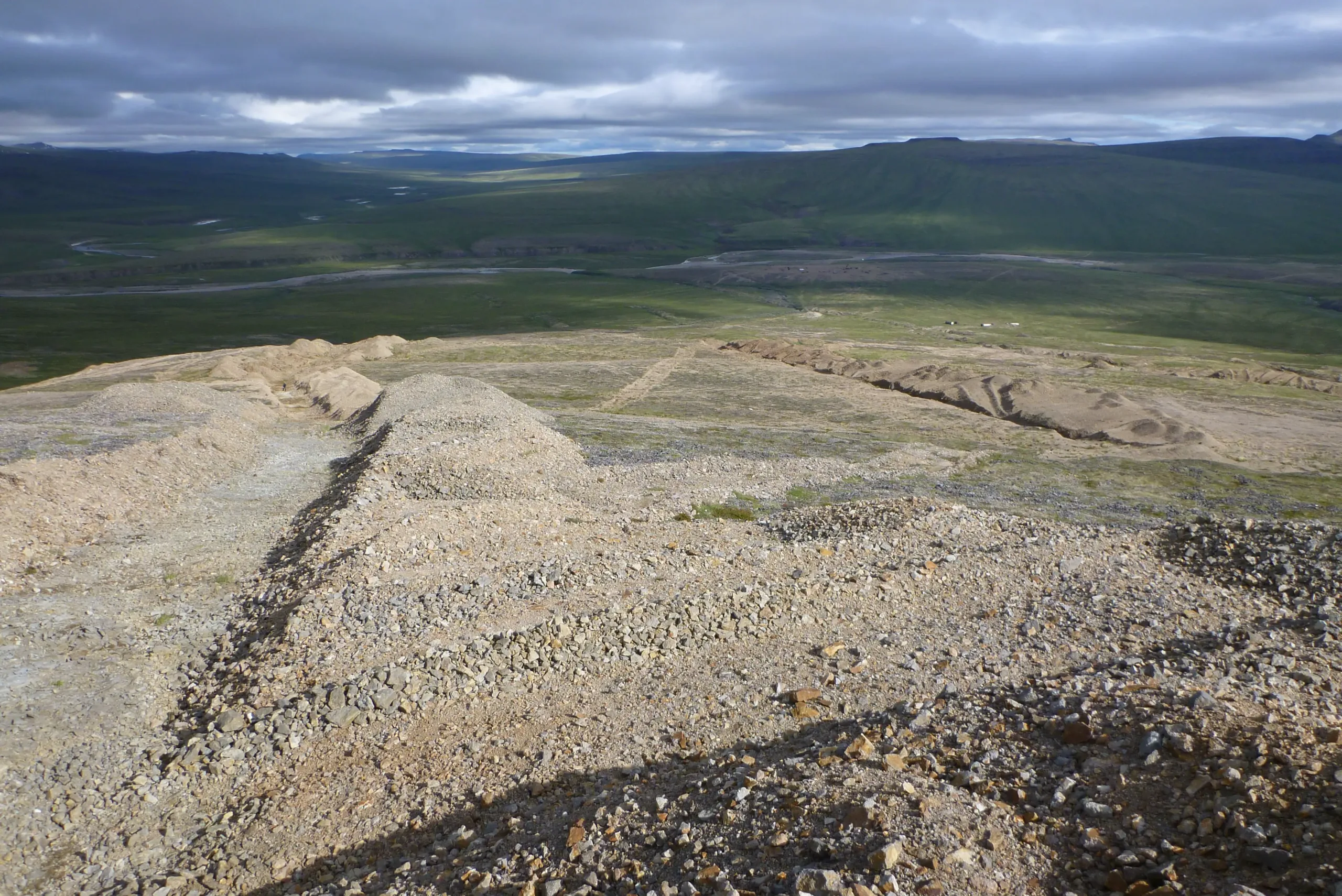
Ildar Kalko recalls the Kupol field in Chukotka. Quartz ore veins there were hidden under black lichen. You can’t tell by eye that it’s quartz and not waste rock. Some of the veins had already been tested at one time, but the spectral analysis of gold at that time had an upper detection limit of about three grams per ton, and everything that was higher was simply “not seen” by the device. The rich areas almost went unnoticed.
Conclusion: observation and knowledge of the limitations of his method insures the geologist against empty drilling and missed discoveries.
“The devil is in the details. Life is in the details,” says Kalko.
This is where his principle follows: a real geologist on a route will not pass by the incomprehensible and will definitely use his skills. When you are a geochemist and your task is to sample the soil, so if you see a rusty zone, you need to stop, tap it with a hammer and take a sample. This is the only way to form a professional habit.
Tip 3: Don’t be afraid to ask stupid questions
The third skill of a geologist is the ability to ask others. talks about him Alexandra Volkova, which teaches both students and adult professionals. A future geologist should know that asking naive questions is natural.
“It’s better if these are stupid, stupid, in his opinion, ridiculous questions than not have them at all,” says Volkova.
The logic is deeper than it seems. When you read a textbook just like that, the information passes by. And when you have a specific question, you start looking for an answer, and the material is put aside. Any question triggers thinking.
This also works for experienced geologists who think they know everything. The technique is the same as that used by students: take an article or section of a textbook, point your finger at a specific place and analyze it in detail – “here it is written like this, but how to do it in practice?” This echoes the advice Ildara Kalko, which he gives to beginners: he found an unknown breed, brought it and learned about it from the elders – this is normal practice, and not a reason for ridicule.
If you are just looking at a profession and don’t yet know what questions to ask, start with a basic analysis – “Profession geologist: what does he do”
Tip 4. Upgrade not only your hard skills, but also your soft skills
A geologist can have deep knowledge, brilliantly calculate models, know all the processes of ore formation – and still not get used to it in production. This is what he says Sergey Kuzmin, geomechanicist and companies “Deep Engineering” and DEEPMINE LAB.
Not only technical training is important in an enterprise. The geomechanicist has the right to stop production. In order for such a decision to be taken seriously, authority is needed, which still needs to be earned. And then begins what they don’t teach at university: production is, first of all, communication, building relationships with people at all stages. To this, Sergey adds three more pillars – emotional intelligence, financial literacy and patience.
It is worth preparing for the load. The first years in the profession are difficult, and it is no coincidence that at one of the enterprises where Sergei worked, a strict motto was used: “Sleep is for weaklings.”
And one more practical thought from him: the path to the profession does not have to be direct. You can enter production in a related role – for example, as a surveyor – and from the inside, seeing the work with your own eyes, move into the direction that is really interesting.
“How much do geologists earn in Russia” – for those who think not only about the profession, but also about the salary
Tip 5. Learn to learn: reflection and working with your request
The last tip is about the geologist skill, without which all the others quickly become obsolete. About him speaks “profession promoter” – Ishak Farkhutdinov, Candidate of Geological and Mineralogical Sciences, Deputy Director of the State Geological Museum named after. V. I. Vernadsky.
The first thought is about reflection. Over the years of study, a geologist receives a gigantic amount of information, but a fraction of a percent of it goes into real work. Reflection helps turn a larger amount of knowledge into real skills – the habit of regularly stopping and asking yourself: what did I understand and what will I do differently now. Ishak spotted this life hack from IT teams: once every week or two you need to sit down and honestly analyze what worked and what can be improved.
The second thought is about the request for development. Previously, Ishak read books “for general development,” but now he selects them for a specific task:
- you need to improve project management – read about project management;
- If you need specific software, you take a course based on it.
This way, knowledge is not scattered, but immediately goes into action. He reduces this thought to a short formula: “You can only know what you do.”
And something else about the necessary knowledge for a geologist
If you put all the advice together, the classic base – mineralogy, petrography, GIS, specialized software – remains mandatory. Field experience, observation, the ability to ask questions, soft skills and the habit of constantly learning – things that are rarely written about in textbooks – turn a geologist into a professional.
Another bonus tip from Mikhail Perebatov, leading geologist from Kamchatka. When asked what the student should take for the first field, he said: “Probably a guitar.”
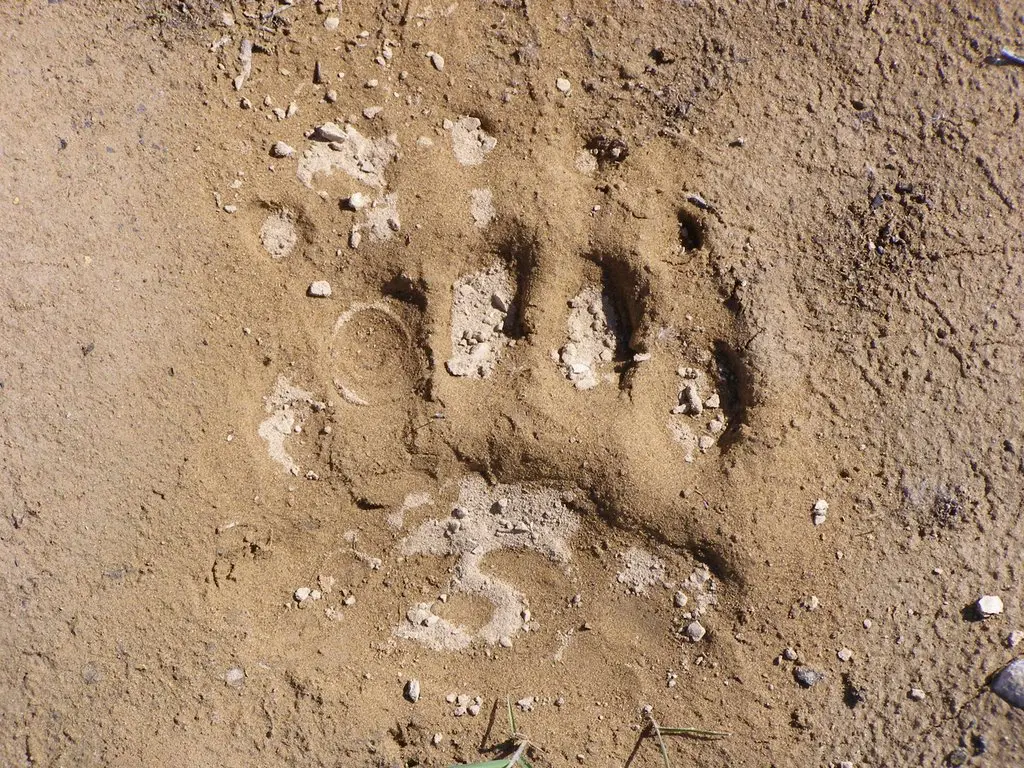
According to him, the first field is not work, but an adventure, after which emotions remain for life. Through bears, deer, a stuck all-terrain vehicle and occasional hunger strikes, a person learns to leave his comfort zone. Perhaps the main skill of a geologist is not to forget, behind the models, samples and standards, why he came to this profession in the first place.
What would you add to this list? What skill was the most unobvious for you at work? Tell us in the comments and we’ll write a sequel.