Alarmist predictions about the imminent collapse of Antarctica’s Thwaites Glacier have been greatly exaggerated. Anna Kozachek, a researcher at the Arctic and Antarctic Research Institute, has explained what is actually happening to the massive glacier and why there is no reason for panic.
In recent years, Thwaites has indeed accelerated its flow and begun losing mass more rapidly. These changes have fueled a wave of dire predictions about an impending global disaster. However, scientists emphasize the importance of distinguishing established facts from speculation.
According to Kozachek, Thwaites currently contributes about 4% of the annual global sea-level rise. In absolute terms, this amounts to approximately 0.12 millimeters per year—a figure that is far from catastrophic.
The glacier’s floating ice shelf could collapse within the next five to ten years. However, this would not immediately raise global sea levels. Floating ice already displaces its own weight in water, so its breakup or melting would not add additional water to the oceans. The situation would be very different if the glacier’s grounded ice sheet were to melt completely. In that case, global sea level could rise by about 60 centimeters. However, such a scenario would unfold over centuries rather than decades. Even the most pessimistic projections estimate the process would take around 200 years, while more optimistic scenarios extend the timeline to as much as 2,000 years.
Kozachek also pointed to the broader context of sea-level rise. Since 1900, the global average sea level has increased by approximately 25 centimeters. The primary driver has not been melting glaciers alone but thermal expansion—the natural increase in water volume as the oceans warm.
Today, global sea level is rising at an average rate of about 3 millimeters per year. Human-driven climate change and the associated loss of glaciers remain serious challenges. However, understanding the scale of the problem requires a balanced scientific perspective rather than apocalyptic predictions.
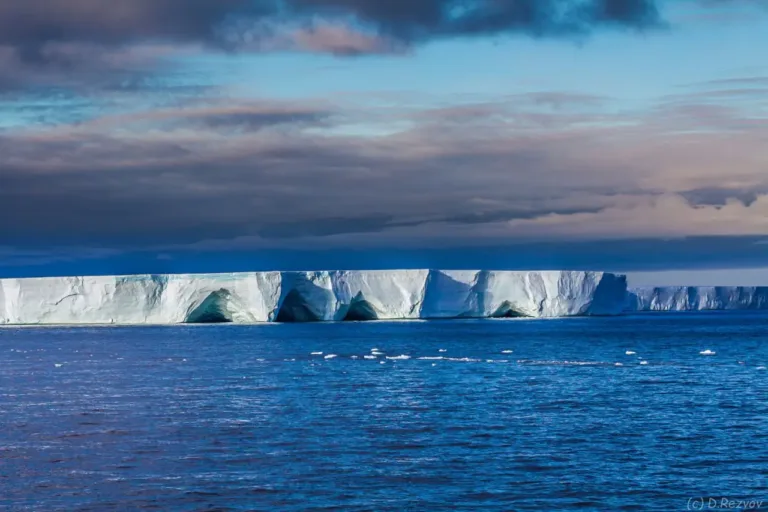
Thwaites Glacier is located in West Antarctica, along the Amundsen Sea coast. Covering approximately 192,000 square kilometers—roughly the size of Great Britain—it is more than 120 kilometers wide, while its outlet glacier advances at a rate of about 2 kilometers per year.
Thwaites deserves close scientific monitoring, but not the title of a “doomsday glacier.” The risks associated with its long-term retreat extend across many generations, leaving humanity time to adapt.
Source: Arctic and Antarctic Research Institute (AARI)
Image: Dmitry Rezvov / AARI