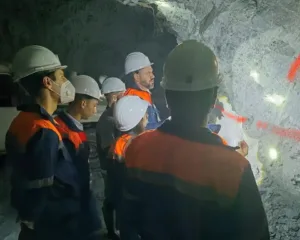
Environmental safety of mining waste became one of the central topics at the 16th international forum MINEX Kazakhstan 2026 in Astana. Decades of mineral extraction have led to the accumulation of vast numbers of tailings storage facilities across the Commonwealth of Independent States. These sites pose serious environmental risks, but with proper management they could also become valuable sources of secondary raw materials.
Many tailings facilities have been operating for decades. Stricter environmental legislation and the implementation of the Global Industry Standard on Tailings Management (GISTM) are creating new requirements for design and operation. Reliable waterproofing has become a critical element of such systems.
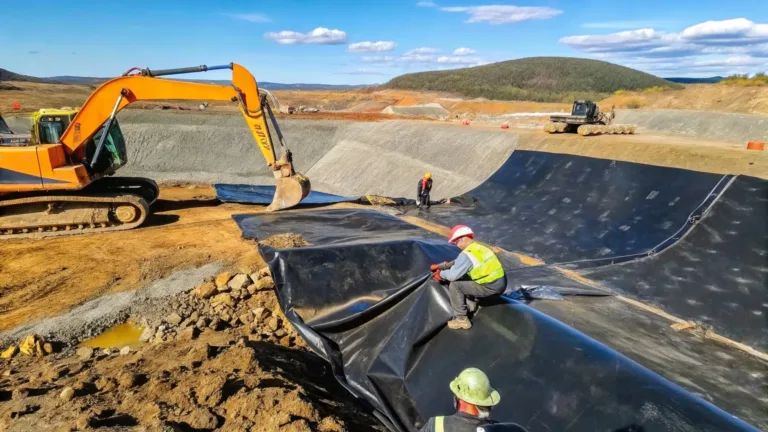
Industry practice shows that the most effective way to prevent toxic substances from leaking into soil and groundwater is the use of geosynthetics, especially geomembranes. They are widely used in tailings facilities and heap leaching pads. In Central Asia, where water quality is under particular scrutiny, such barriers are considered essential.
There are several methods for waterproofing pits and waste storage sites: rock colmatation, injection curtains, concrete lining and geosynthetics. The quality of geosynthetics directly determines environmental safety. Industry experts warn that the current Russian GOST standard focuses mainly on strength characteristics and does not fully account for long-term durability. Yet geomembranes must retain their properties for decades while resisting chemicals, mechanical stress and temperature fluctuations. International standards already regulate the quality of protective liners designed to operate for decades in aggressive environments.
The material composition of geosynthetics is also critical. The use of recycled polymers may reduce strength and resistance to degradation. Over the long term, this creates the risk of leaks and potentially major environmental disasters.
For this reason, specialists are calling for revisions to Russian GOST standards. Regulations should cover not only basic strength parameters, but also the full range of durability characteristics, including chemical resistance, aging stability and resistance to mechanical stress. GOST R 56586 already contains mandatory requirements for raw materials used in geomembrane production. The next step is to make these requirements compulsory for all suppliers working with mining tailings facilities, municipal solid waste landfills and other industrial sites.
Tailings management is becoming a key factor in the future development of the mining industry. New projects are increasingly expected to account for impacts on ecosystems and nearby communities.
The problem has gone beyond national borders. In 2025 alone, more than 55 billion tonnes of technogenic waste formations were deposited in dumps and tailings facilities in Kazakhstan. Across the CIS, tailings volumes are already measured in the hundreds of billions of tonnes. The key conclusion of MINEX Kazakhstan 2026 was clear: without modern approaches to the design, operation and monitoring of tailings facilities, the industry will continue accumulating environmental risks for decades to come.
Engineers and regulators are increasingly designing protective systems with service lives of 25–50 years — the only timeframe considered sufficient to reduce the risks of leaks, soil contamination and groundwater pollution. At the same time, tailings facilities are no longer viewed solely as legacy waste sites. With proper management, they are increasingly seen as potential reserves of secondary mineral resources for CIS countries.
Source: Nedra Rossii
Image: Nedra Rossii