Japanese researchers have produced the first global assessment of how different types of mining affect forests and biodiversity. While gold and coal mining remain the leading drivers of deforestation, the study highlights an unexpected finding: lithium, a critical mineral for the clean energy transition, can cause severe ecological damage with relatively little visible landscape disturbance.
The research was conducted by scientists from Tohoku University and Japan’s National Institute for Environmental Studies. Using satellite imagery and machine learning, they analyzed nearly 70,000 mining sites covering 20 different mineral commodities.
Between 2001 and 2022, mining activities resulted in the loss of approximately 16,300 square kilometers of forest—an area comparable to the size of Beijing. The greatest losses occurred in the tropical forests of the Amazon Basin, Southeast Asia, and the Congo Basin.
According to lead researcher Keiichiro Kanemoto, advances in satellite monitoring and artificial intelligence have made it possible to assess the global environmental footprint of mining in unprecedented detail. As the energy transition reshapes demand toward critical minerals, comprehensive data on the ecological consequences of extracting these resources has been lacking.
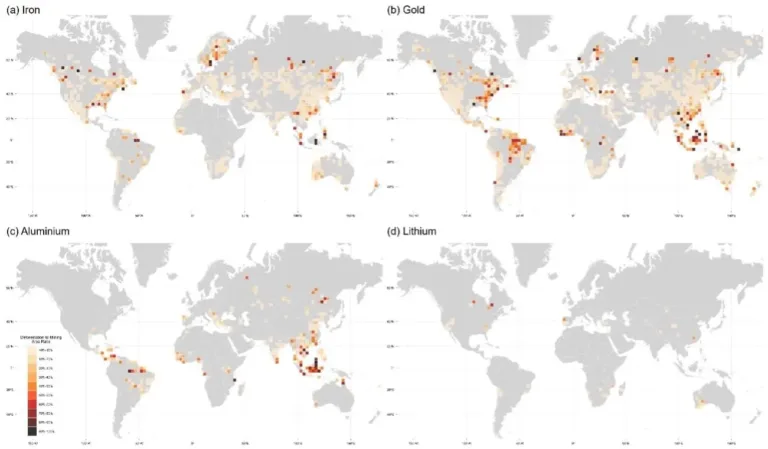
When researchers compared deforestation with species extinction risks, a different picture emerged. Gold and coal remained the largest contributors to forest loss, but minerals essential for the energy transition ranked among the most significant threats to biodiversity. Lithium showed one of the highest risks to species despite causing comparatively limited deforestation.
The finding represents an important shift in understanding mining’s environmental impact. Conventional mining often leaves extensive areas of visible land disturbance. Lithium projects, however, are frequently located on salt flats and wetland ecosystems, where ecological disruption occurs without widespread tree clearing but can have devastating consequences for endemic species.
The authors note that lithium, cobalt, and nickel are indispensable for electric vehicles and energy storage technologies, yet their extraction carries substantial environmental costs. The new dataset could help governments develop mineral-specific environmental regulations while enabling mining companies to better assess regulatory risks and supply chain vulnerabilities.
The road to a low-carbon future runs through the mining sector—and that path comes with an environmental price. This study provides the first global-scale assessment of that cost, demonstrating that the energy transition will require not only new sources of critical minerals, but also higher environmental standards for their extraction.
Source: Nature Communications
Image: Cheng et al.