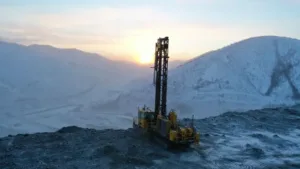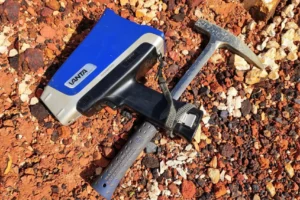
In the coming years, Kazakhstan plans to dramatically intensify the search and evaluation of mineral resources. Already by 2028 geologists Vast territories will be studied, and a modern geolaboratory will appear in the country. These steps will strengthen the mineral resource base and attract new investors.
The Geological Survey of Kazakhstan begins large-scale work. Already in 2026–2028, specialists will study in detail 100 thousand square kilometers of the republic’s territory. In subsequent years, the annual volume of surveys will be at least 30 thousand square kilometers. 240 million tenge has already been allocated for the preparation of twenty promising projects.
The results of this strategy are already visible. In 2025 alone, five new significant ones were discovered and officially registered. deposits: Kok-Zhon, Altyn-Shoko, Samombet, Student and Takyr-Kaldzhir. These discoveries made it possible to significantly increase national reserves of resources. The increase amounted to 98 tons of gold, 36 thousand tons of copper, 11 million tons of manganese and 1.3 million tons of phosphorites.
It is known that about 10 thousand deposits are concentrated in Kazakhstan and 103 types of minerals are found. For their development, the Ministry issued 2.9 thousand licenses and concluded 250 contracts.
Key role in attracting investment played by the national company Tau-Ken Samruk. She managed to attract international giants such as Fortescue and Esan. To date, 21 joint ventures have been created, and the total investment volume has exceeded 72 billion tenge. The company has already added 8 fields to its balance sheet.
Particular attention is paid to a number of pilot projects, including Zhosabay, Kuyrektykol, Karatas and others. Active work is underway to calculate reserves according to the international standard. JORC, which is scheduled to be completed by 2028.
To protect state interests, Tau-Ken Samruk reserves the priority right to develop the most promising subsoil areas. At the same time, active digitalization of the industry is underway. 66 thousand geological reports are available on the unified subsoil use platform. 73% of all primary data has already been digitized, and the full transition to digital is planned to be completed in 2026.
By the end of 2028, a modern geological complex will be built in Astana. A certified laboratory with a fund and core storage facility will appear on the basis of the National Geological Survey. The cost of the project is estimated at 14 billion tenge, and its implementation on a 4-hectare site will be an important step for independent examination and further development of the country’s mineral resource complex.
The material was prepared with the support of the Russian Ministry of Education and Science as part of the Decade of Science and Technology.
Source: @metalsesgtrends
Image generated by a neural network