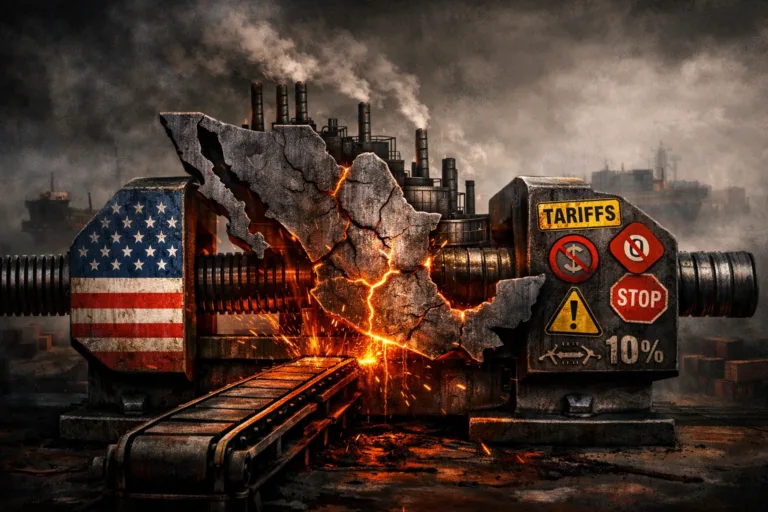
In early 2026, Mexico’s steel industry found itself hostage to Washington’s own trade policies and decisions. The synchronized decline in imports, exports and domestic consumption of steel was the result of mirror duties that Mexico City introduced to protect the market, and the United States to revise trade relations.
Since January 1, Mexico has raised tariffs on more than 1,400 items from countries that do not have trade agreements with it. For almost 300 types of steel products and scrap, rates reached 35%, and for certain items – 50%. This has virtually closed market access to Chinese, Korean and Japanese suppliers. As a result steel import in January–February fell by 21%.
However, the blow to exports turned out to be much more painful. In January, shipments of Mexican steel abroad fell by 47%. The reason is the US decision to impose a 25% tariff on steel imports, which was subsequently increased to 50%. Although the United States remains the main foreign market for Mexican steelmakers, its share of exports has collapsed from 79 to 43% in just a year. This represented a structural break in the economic model in which Mexico had long been a manufacturing appendage of American industry.
The internal situation has also worsened. The country’s steel production fell another 16% relative to 2025 levels, continuing a two-year decline. Consumption fell by 14%. Demand began to decline at the beginning of 2024 amid political uncertainty, then a cooling economy and trade tensions with the United States. Investment pause in construction and the automotive industry only made the situation worse.
From the point of view of experts, Mexico City is trying to solve several problems at the same time: protect the domestic market from Asian dumping, equalize the trade balance and demonstrate loyalty to Washington in anticipation of the revision of the USMCA agreement. But as a result, the country risks driving its own steel industry into a deep recession. The rejection of cheap imports and the loss of export positions for the sake of a political agenda result in a drop in production and consumption.
The Mexican metallurgy industry was trapped by its own tariff decisions and external pressure. A way out of this situation will require not only a revision of the trade strategy, but also the search for new markets, as well as the restoration of confidence within the country.
Source: @Metals_Mining